
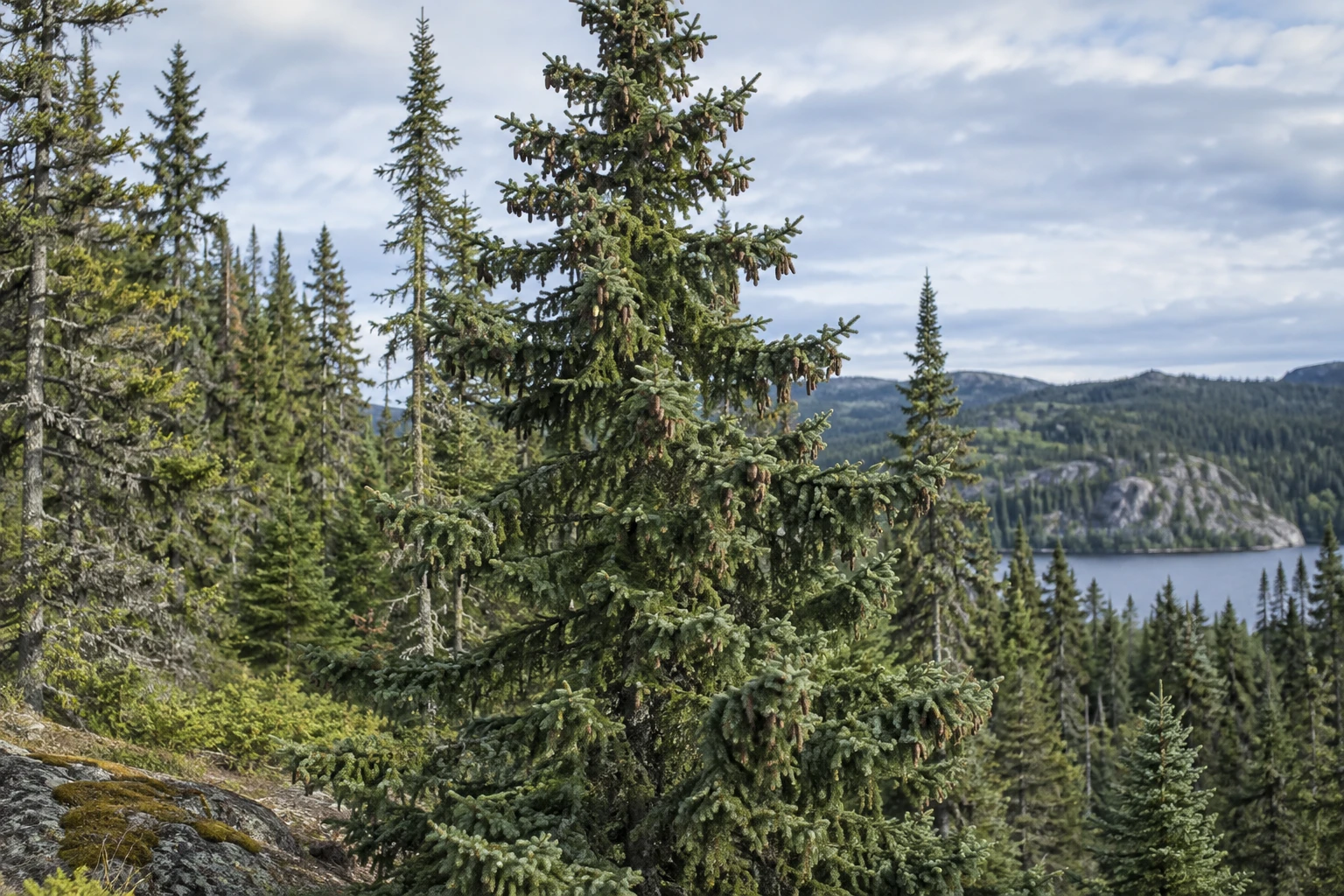
Spruce
Picea mariana (black), Picea glauca (white)
White spruce, black spruce
Based on the courses of Églantine Vignon, Master Herbalist Updated
How to identify spruce
What to check before harvesting or using it.
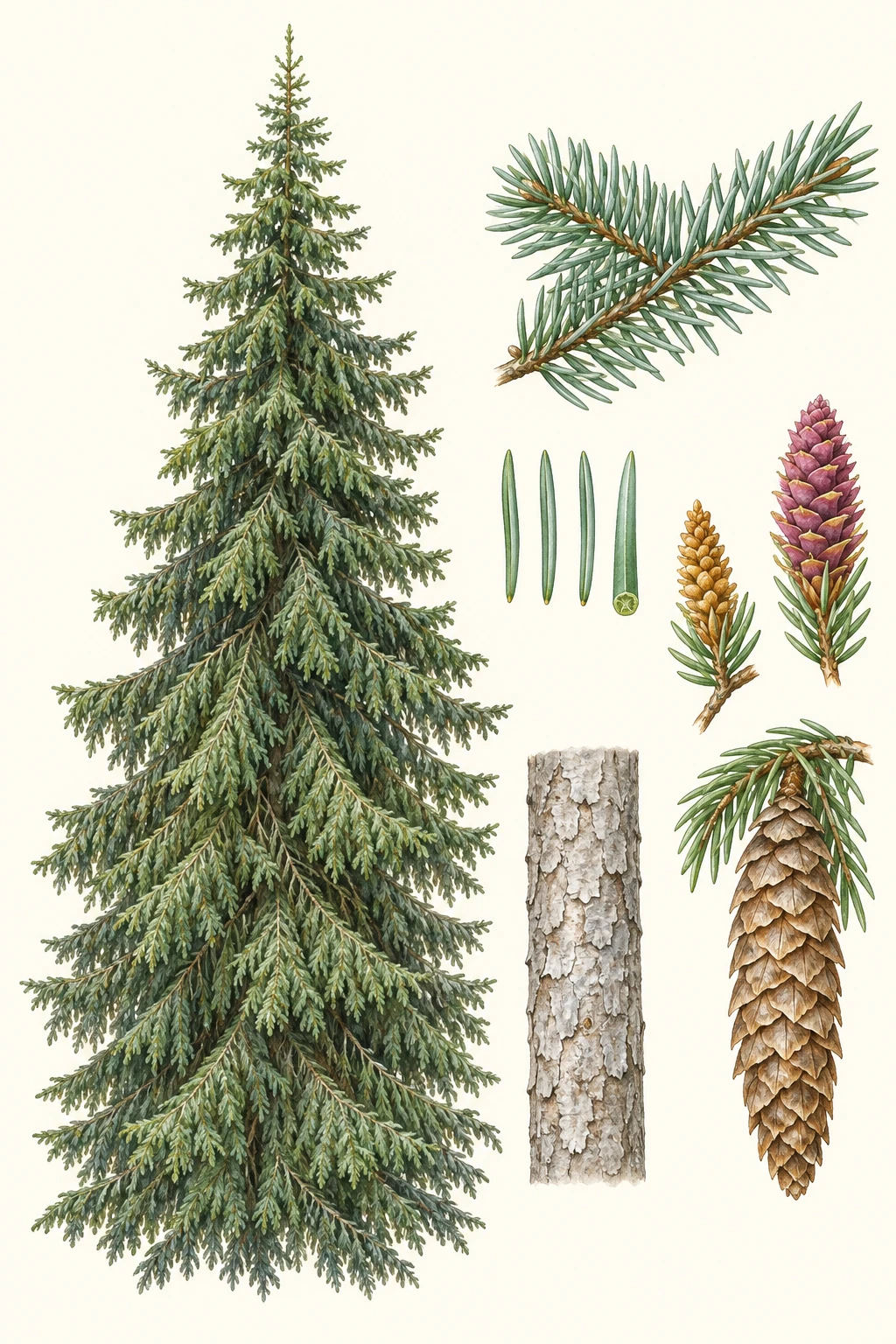
Spruce has a dense, pyramid-shaped habit.
- General habit
- It is bushy and compact (6 to 8 m) in areas where the climate is harshest, and tree-like and slender (20 m tall) in areas that suit it, with branches that droop more and more with age.
- Stem
- Black spruce and white spruce can be told apart by the colour of the central stem under the branch.
Spruce in the garden
- Sun exposure
- Full sun
- Soil
- Acidic, cool to moist, often peaty or rich in organic matter
Sources
- Plant profiles from the course “Wild Medicinal Plants”, eJardin Academy