
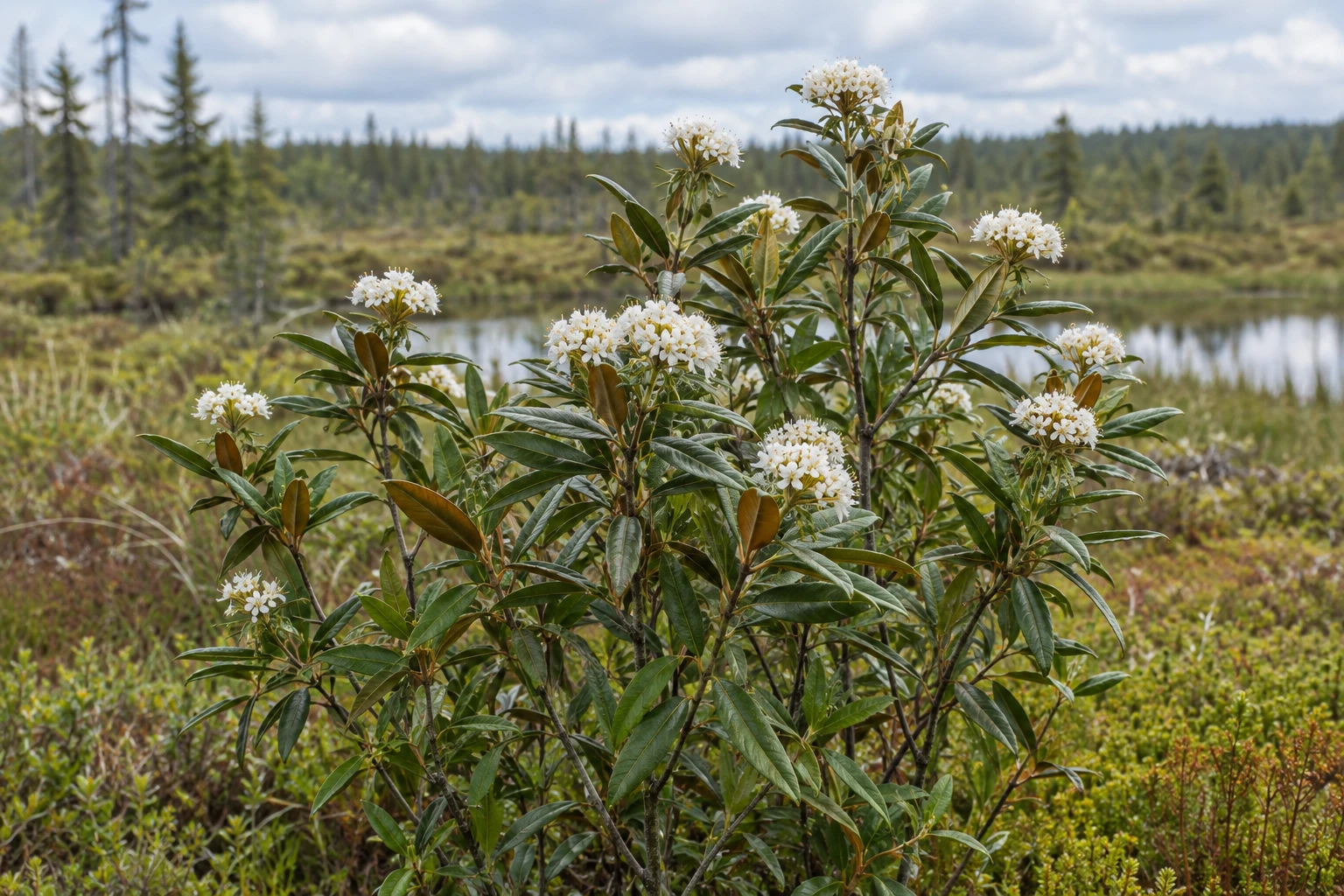
Labrador tea
Rhododendron groenlandicum (Ledum groenlandicum)
bog Labrador tea
Based on the courses of Églantine Vignon, Master Herbalist Updated
How to identify Labrador tea
What to check before harvesting or using it.
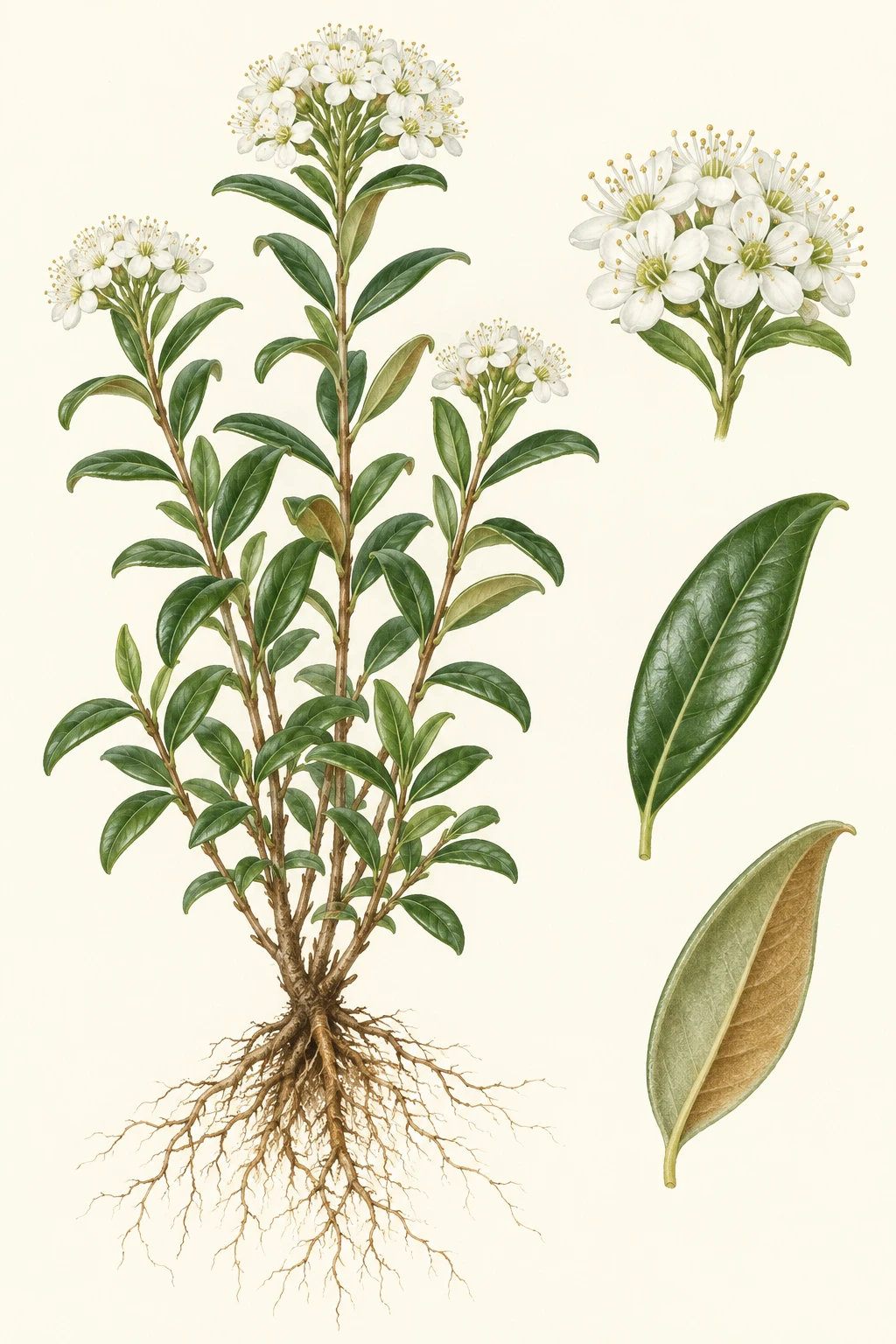
Labrador tea is an upright subshrub up to 1.50 m tall and wide.
- Stem
- The stems are upright or lying down, with smooth bark. The young twigs are covered with a thick, rust-coloured down.
- Leaves
- The leaves are evergreen, alternate, simple, elliptical and elongated, and the edge of the blade is rolled under. The upper side of the leaf is green and shiny, while the underside is covered with a thick white down that later turns rust-coloured.
- Do not confuse with
- Narrow-leaved kalmia, or sheep laurel (Kalmia angustifolia), grows side by side with Labrador tea and looks a lot like it. It is toxic. To tell them apart, turn the leaf over: the underside of a Labrador tea leaf is covered with a thick down, white and then rust-coloured; that of kalmia is smooth and bare. In spring, kalmia flowers are pink, those of Labrador tea white.
Labrador tea in the garden
- Sun exposure
- Sun to partial shade
Sources
- Plant profiles from the course “Wild Medicinal Plants”, eJardin Academy