
Wild rose
Rosa rugosa, blanda in Quebec and canina (dog rose) mainly in Europe (uncommon in Quebec)
dog rose, rose hip
Based on the courses of Églantine Vignon, Master Herbalist Updated
How to identify wild rose
What to check before harvesting or using it.

Suckering shrub with a perennial rootstock, up to 1.5 m tall.
- Leaves
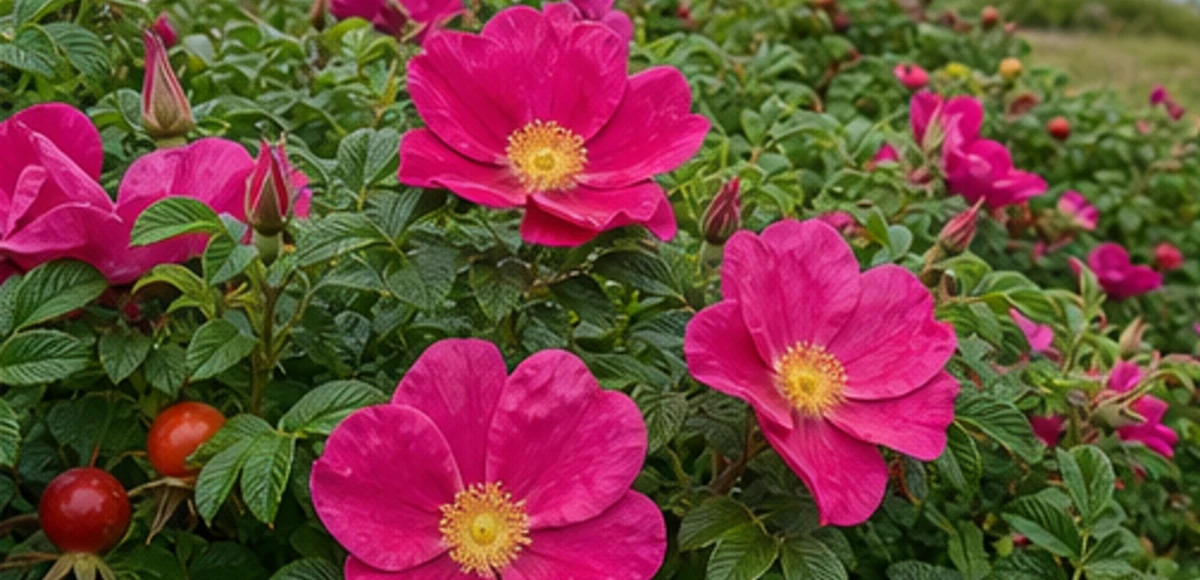
- The leaves, 8 to 15 cm long, are odd-pinnate, compound with 5 to 9 leaflets (most often seven); each leaflet is 3 to 4 cm long, with clearly wavy, wrinkled surfaces, hence the name of the species.
- Flowers
- The flowers are pleasantly fragrant (this is not the case for blanda), white to deep pink, 6 to 9 cm in diameter, with slightly crumpled petals, double or single.
Wild rose in the garden
- Sun exposure
- Full sun
Sources
- Plant profiles from the course “Wild Medicinal Plants”, eJardin Academy