
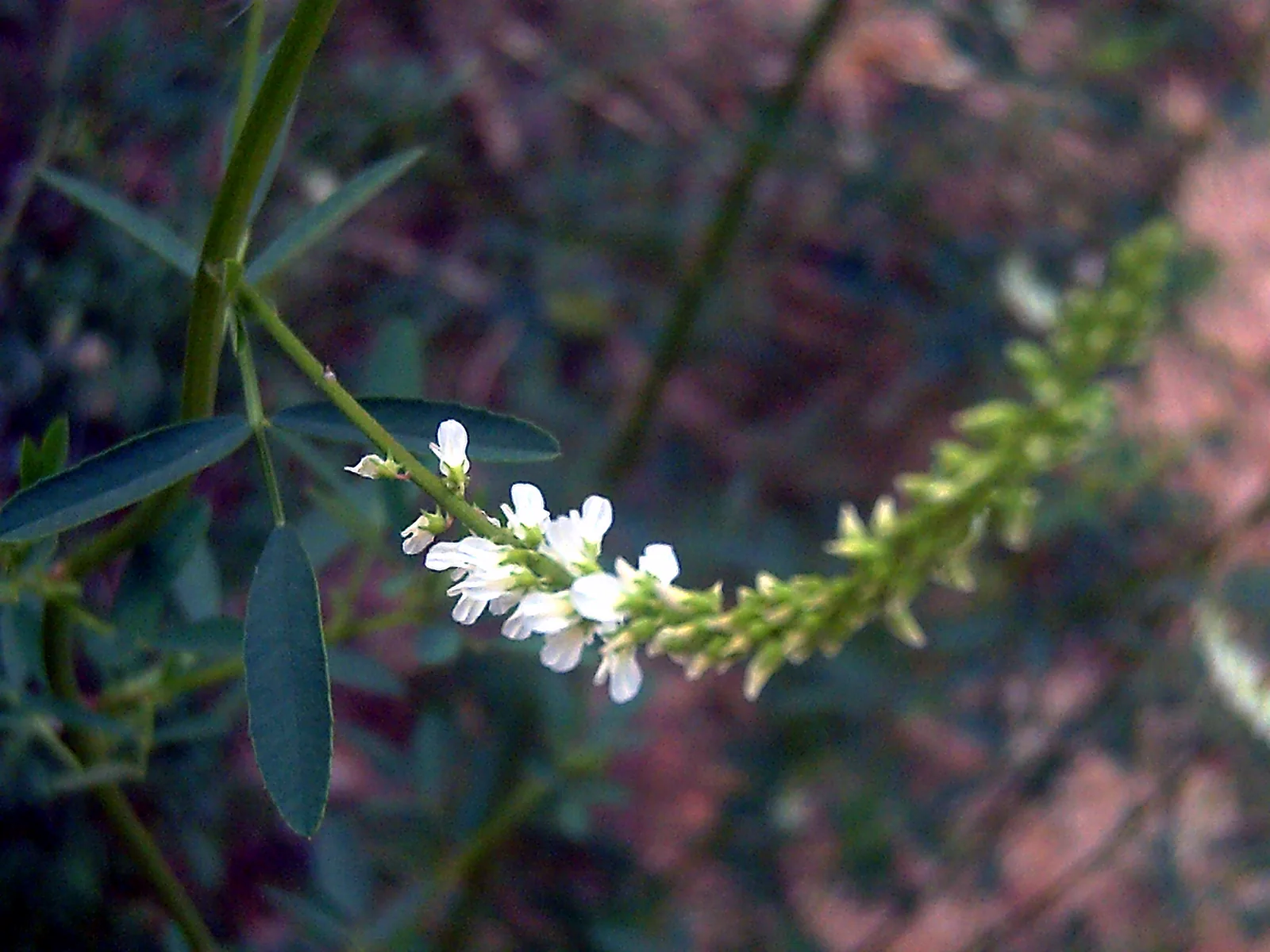
White sweetclover
Melilotus albus (arvensis, officinalis)
white melilot, honey clover
Reviewed by Églantine Vignon, Master Herbalist, on
How to identify white sweetclover
What to check before harvesting or using it.

White sweetclover is a tall, usually biennial herbaceous plant that likes full sun and compacted, disturbed, dry soils, such as roadsides and railway tracks.
- Stem
- It grows upright, with a branched central stem, smooth and hairless, that can reach 1 to 3 metres tall.
- Leaves
- Its alternate, stalked leaves are divided into three leaflets, oval to oblong or lance-shaped, with irregularly toothed edges; they look very much like alfalfa leaves.
- Flowers
- The white, fragrant, stalked flowers are arranged in long clusters and bloom from May to September.
- Fruit
- Small oval pods, smooth, pointed at the tip and yellowish brown, that do not split open. Each one usually holds a single seed (sometimes more), yellow or greenish.
- Do not confuse with
- Before flowering, yellow sweetclover (Melilotus officinalis) looks extremely similar. It is almost impossible to tell them apart before the flowers appear: yellow on one, white on the other.
Traditional uses of white sweetclover
- Cardiovascular
- Immune and lymphatic
- Nervous
- Skin and integumentary
- Musculoskeletal
Sweetclover is traditionally associated with circulation. Its flowering tops tone the veins and help lymph flow, which is why it is used for heavy legs and water retention. It is also said to soothe inflammation, and it is mildly calming. Externally, it is applied locally to small bruises.
Good to know
When poorly dried or mouldy, it produces a substance that thins the blood: so it is only used when thoroughly dry. If you take an anticoagulant (aspirin included), if your liver enzymes are high, or during pregnancy and breastfeeding, avoid it.
Sources
- Plant profiles from the course “Managing Garden Weeds as Valuable Allies”, eJardin Academy