
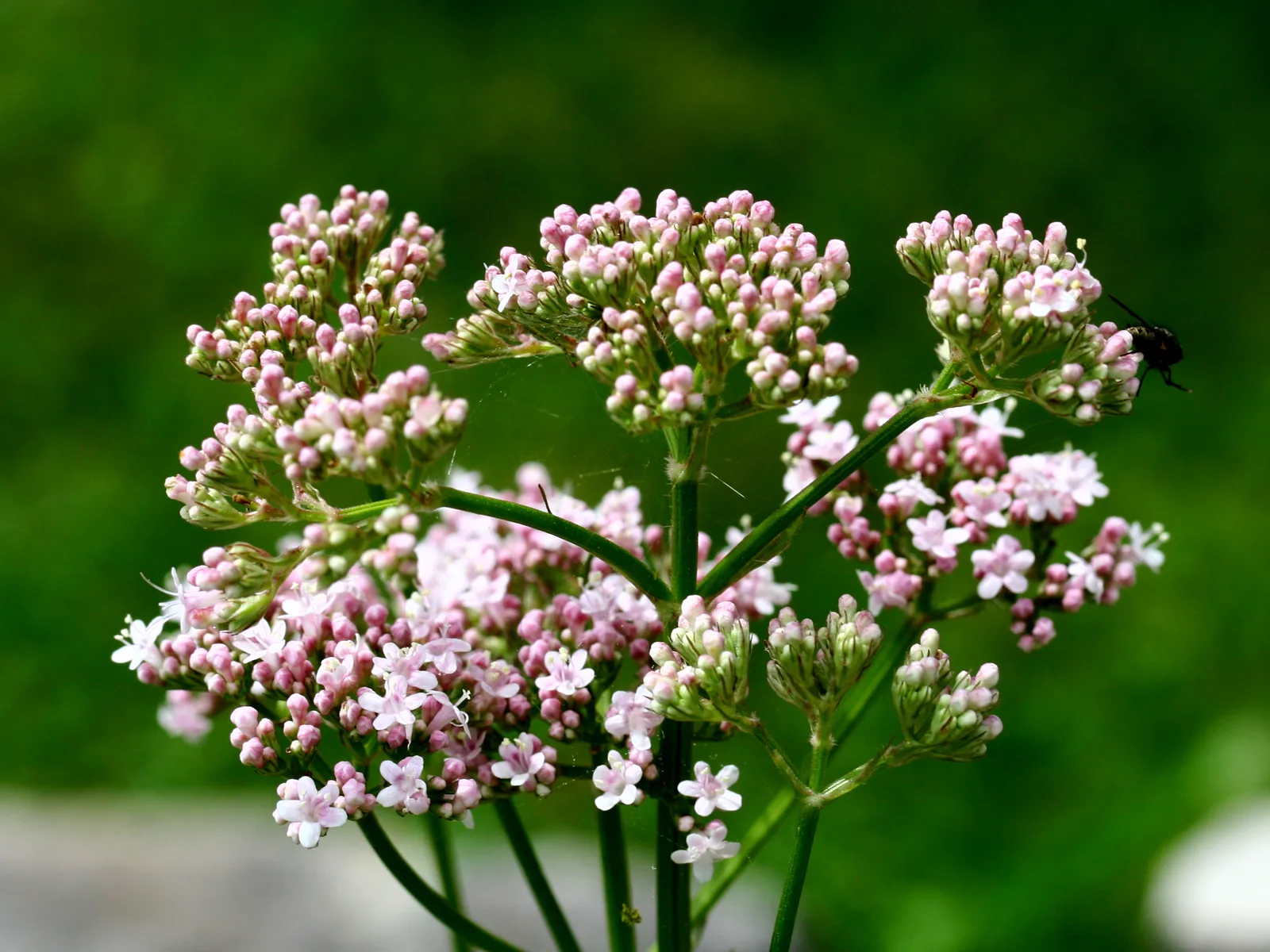
Valerian
Valeriana officinalis
Hill valerian or small-leaved valerian
Based on the courses of Églantine Vignon, Master Herbalist Updated
How to identify valerian
What to check before harvesting or using it.

Perennial plant that can reach 1 m in height.
- Stem
- Valerian is a herbaceous perennial with a stem that can reach 1 metre in height. The stem is cylindrical, hollow, grooved, upright and slightly branched at the top.
- Leaves
- Its leaves, opposite and sheathing, are deeply divided into a variable, odd number of oblong, pointed, broadly cut leaflets. Caution: valerian grows in the same damp ditches as spotted water hemlock, a deadly plant whose foliage is also deeply divided. Water hemlock has a purple-spotted stem, finely toothed, lance-shaped leaflets and roots swollen into tubers. When in doubt, do not pick.
Valerian in the garden
- Sun exposure
- Full sun to partial shade
- Soil
- Cool to moist, deep, fertile, rich in organic matter and well-drained
Sources
- Plant profiles from the course “Wild Medicinal Plants”, eJardin Academy