
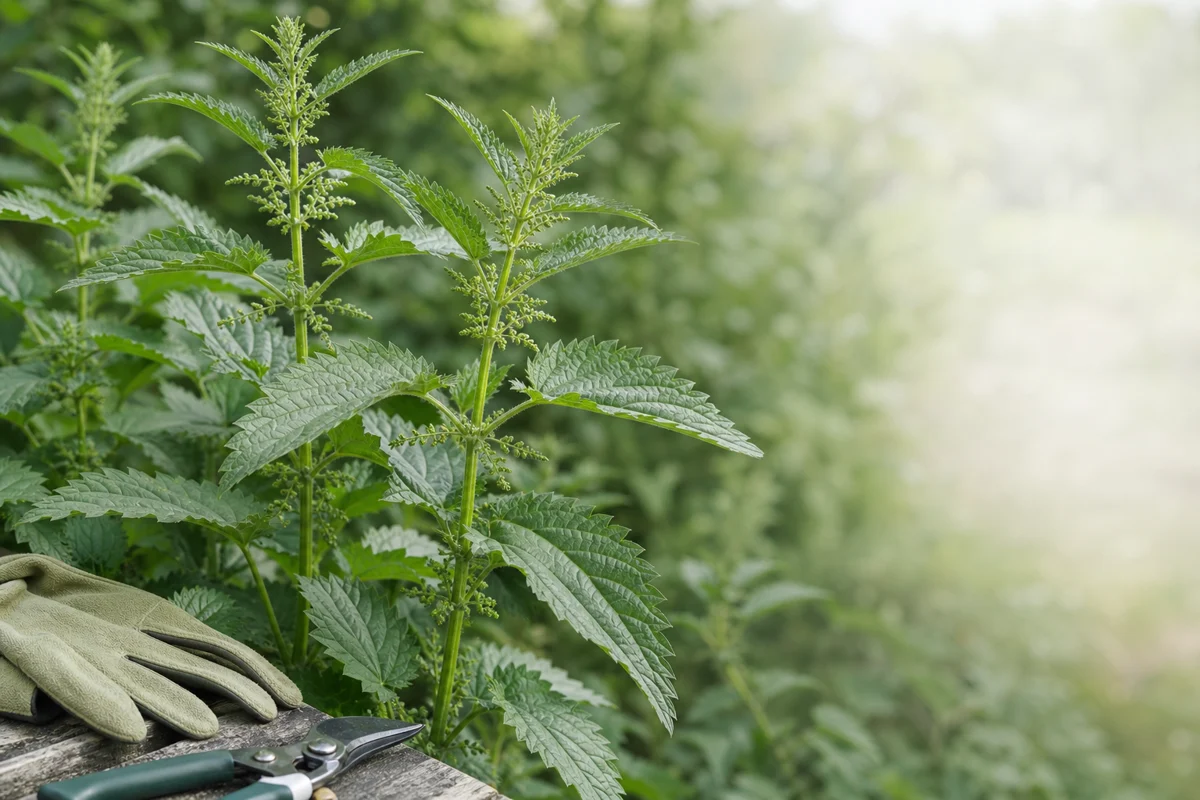
Stinging nettle
Urtica dioica
common nettle, great nettle
Reviewed by Églantine Vignon, Master Herbalist, on
How to identify stinging nettle
What to check before harvesting or using it.

Perennial plant, 50 cm to 1 m tall.
Traditional uses of stinging nettle
- Urinary and renal
- Musculoskeletal
- Skin and integumentary
A nourishing plant, stinging nettle has leaves rich in iron and minerals. It is traditionally used to remineralize the body and restore energy when fatigue sets in. Herbalists also associate it with urinary drainage, joint comfort and healthy hair, and it is said to support breast milk production. Its root has its own uses: it is associated with urinary comfort in men.
Good to know
It stings when you pick it: wear gloves, and the sensation goes away on its own. If you take a diuretic or anticoagulant medication, talk to your pharmacist first.
Stinging nettle in the garden
- Sun exposure
- Full sun or partial shade, but prefers shade
- Soil
- Rich in organic matter, fertile, moist
- Hardiness zone
- 2
Sources
- Plant profiles from the course “Medicinal Plants in the Garden”, eJardin Academy
- Plant profiles from the course “Wild Medicinal Plants”, eJardin Academy