
Raspberry
Rubus idaeus
Mount Ida bramble
Based on the courses of Églantine Vignon, Master Herbalist Updated
How to identify raspberry
What to check before harvesting or using it.

Perennial shrub with biennial stems, 1 to 2 m tall.
- Leaves
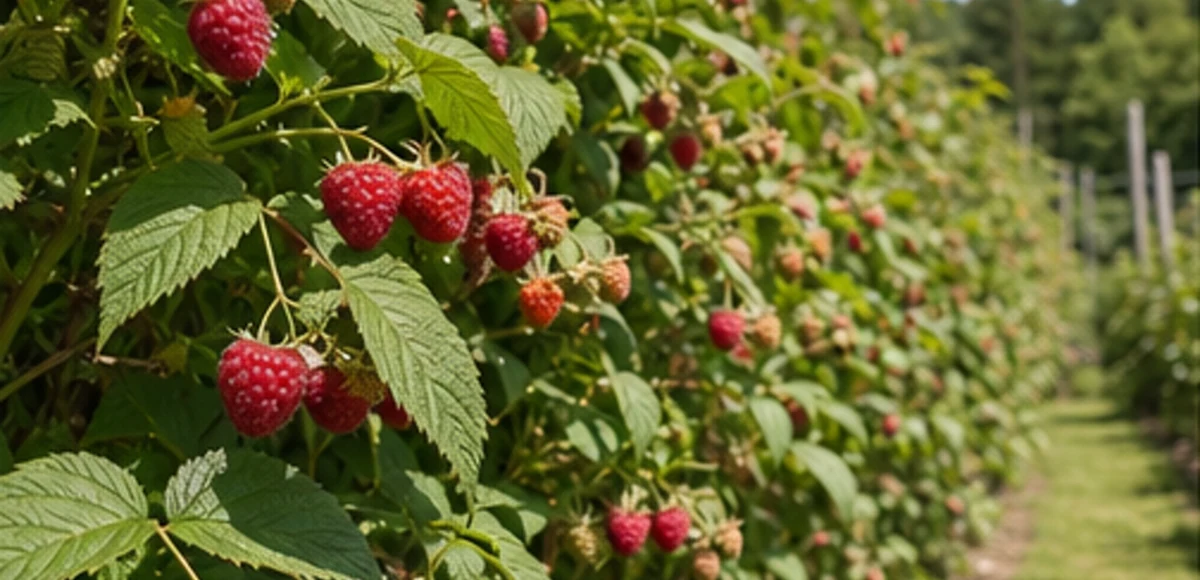
- Its leaves are pinnate, hairy, dark green on top and whitish underneath; at the base they have 5 to 7 toothed leaflets, and at the top 3 leaflets (trifoliate).
- Flowers
- On 2nd-year stems, clusters (corymbs) of white flowers appear in spring; they then give the fruits, which form what is called a polydrupe and are red to pinkish.
Raspberry in the garden
- Sun exposure
- Sun or partial shade
- Soil
- Rich in organic matter, cool, loose and well-drained, slightly acidic to neutral
Sources
- Plant profiles from the course “Wild Medicinal Plants”, eJardin Academy