
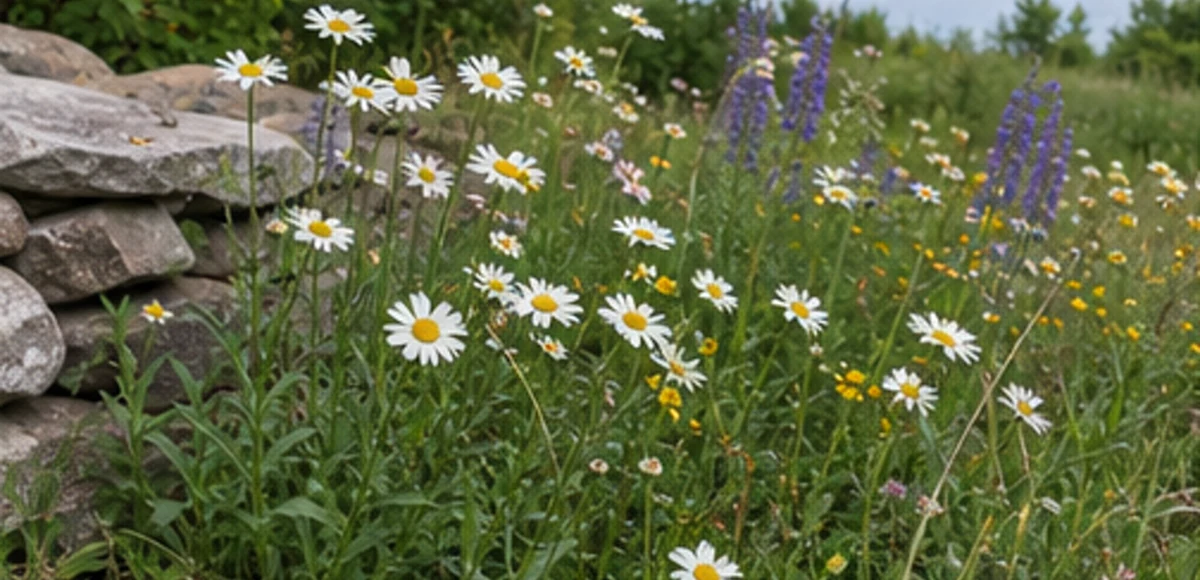
Oxeye daisy
Leucanthemum vulgare
white daisy, moon daisy, dog daisy, Chrysanthemum leucanthemum
Based on the courses of Églantine Vignon, Master Herbalist Updated
How to identify oxeye daisy
What to check before harvesting or using it.

Perennial plant 30 to 60 cm tall.
- Flowers
- The inflorescences are large flower heads with white rays around a yellow centre (3 to 5 cm in diameter), itself made up of many small sessile flowers, or florets.
- Fruit
- The seeds are elongated achenes 2 to 3 mm long, dark brown with lighter sides. They have no tuft of hairs (pappus).
- Do not confuse with
- Oxeye daisy is distinguished mainly by its whole or coarsely toothed leaves, whereas the mayweeds and chamomiles (matricarias) generally have very fine, deeply divided leaves; their flower heads can look alike, but the foliage easily tells them apart. Yellow rocket (Barbarea vulgaris) has leaves whose end lobe is larger, with small opposite side lobes. Its flowers are yellow.
Oxeye daisy in the garden
- Sun exposure
- Full sun
Sources
- Plant profiles from the course “Wild Medicinal Plants”, eJardin Academy
- Plant profiles from the course “Managing Garden Weeds as Valuable Allies”, eJardin Academy