
Moringa
Moringa oleifera Lam.
Reviewed by Églantine Vignon, Master Herbalist, on
How to identify moringa
What to check before harvesting or using it.

It is a deciduous tree that can reach 10 to 12 metres tall, with a slender, greyish, slightly cracked trunk.
- Leaves
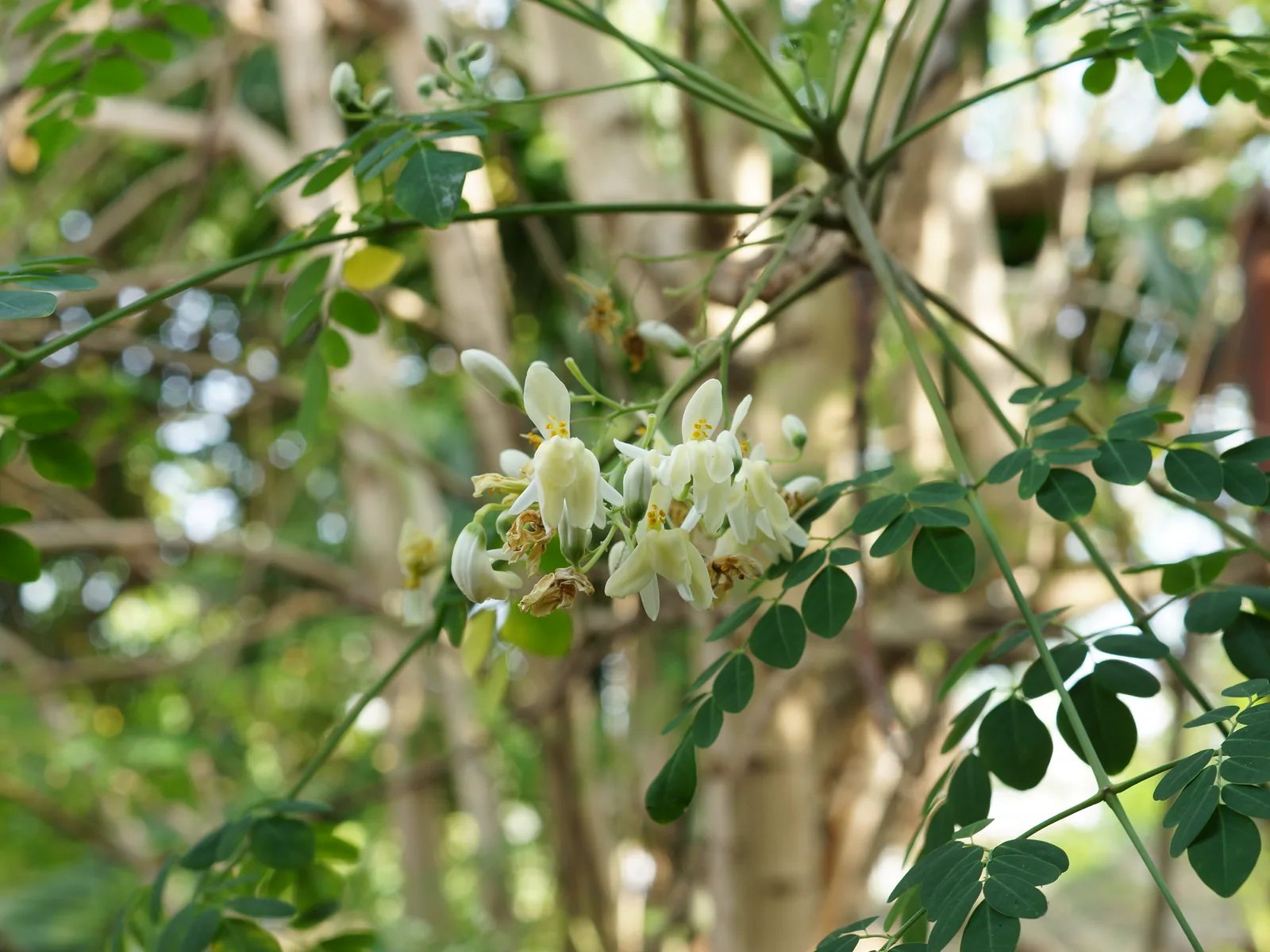
- Its leaves are compound and tripinnate (that is, divided into many leaflets); they are 30 to 60 cm long and each leaf is made up of small, light green, oval or elliptical leaflets.
- Flowers
- Moringa produces creamy white flowers, grouped in clusters (panicles) where the leaves join the stem; they are lightly scented and attract bees.
Traditional uses of moringa
- Digestive
- Endocrine and metabolic
- Cardiovascular
- Immune and lymphatic
- Skin and integumentary
Moringa is a nourishing tree. Its leaves are packed with vitamins, minerals, protein and antioxidants, and they are widely eaten in tropical regions. Tradition also associates it with digestion, the body's defences and blood sugar balance, while its oil nourishes the skin and hair.
Good to know
Eat its leaves in moderation. Its root and root bark are not eaten, because they are toxic. Avoid it during pregnancy.
Sources
- Plant profiles from the course “Tropical Medicinal Plants”, eJardin Academy