
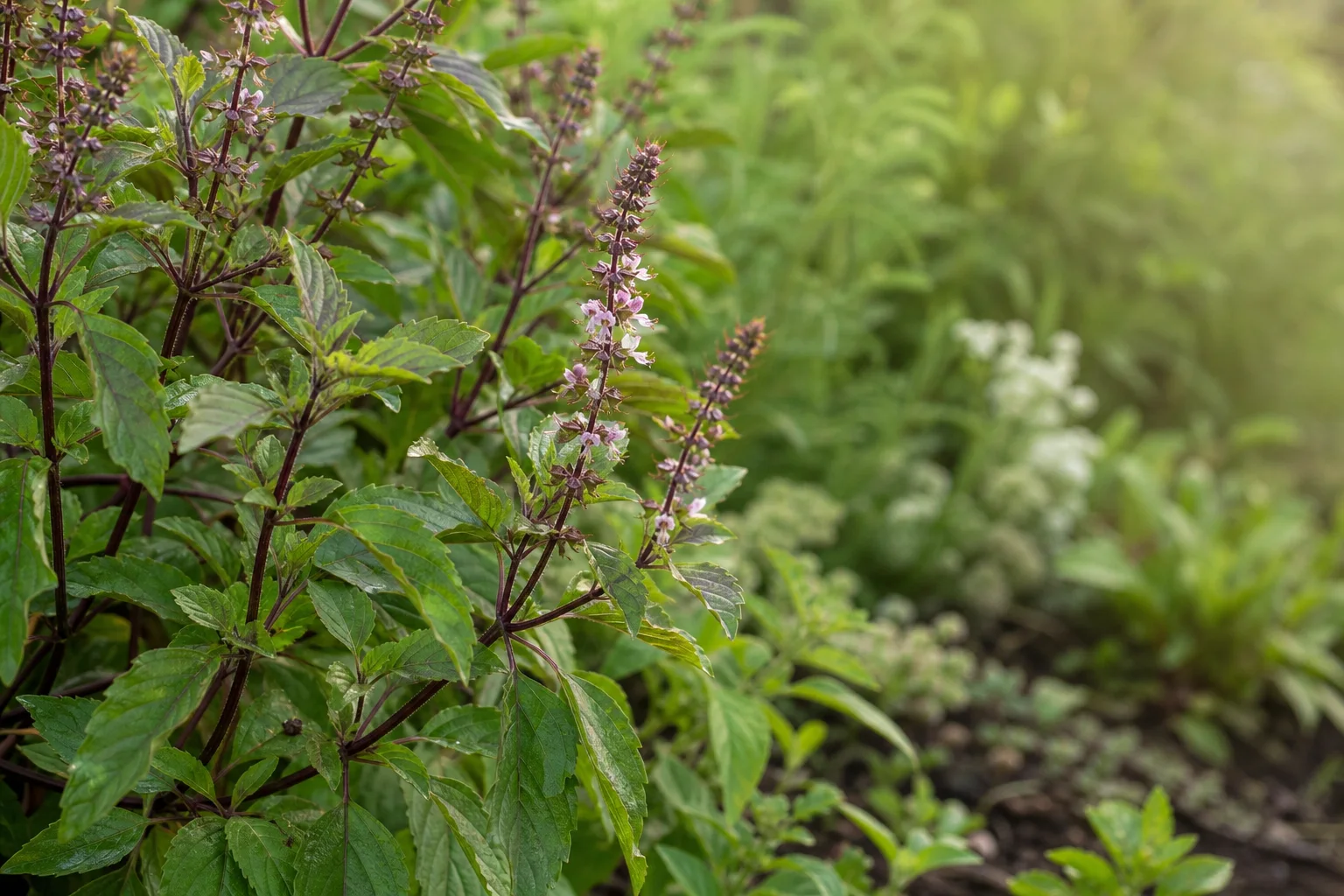
Holy basil
Ocimum sanctum
tulsi
Based on the courses of Églantine Vignon, Master Herbalist Updated
How to identify holy basil
What to check before harvesting or using it.

An annual plant that can reach 60 cm tall (about 40 cm in Québec).
Traditional uses of holy basil
- Nervous
- Endocrine and metabolic
- Cardiovascular
- Immune and lymphatic
- Respiratory
- Digestive
In India, tulsi is a sacred plant and an everyday tonic. Tradition makes it an adaptogen, meaning a plant that helps the body better withstand stress. It supports vitality and helps people get through periods of nervous tension or restless sleep. It is also associated with blood sugar balance and respiratory comfort.
Good to know
During pregnancy and breastfeeding, and for babies and young children, avoid it, especially as an essential oil.
Holy basil in the garden
- Sun exposure
- Full sun
- Soil
- Well-drained, light and fertile
- Hardiness zone
- 10
Sources
- Plant profiles from the course “Medicinal Plants in the Garden”, eJardin Academy