
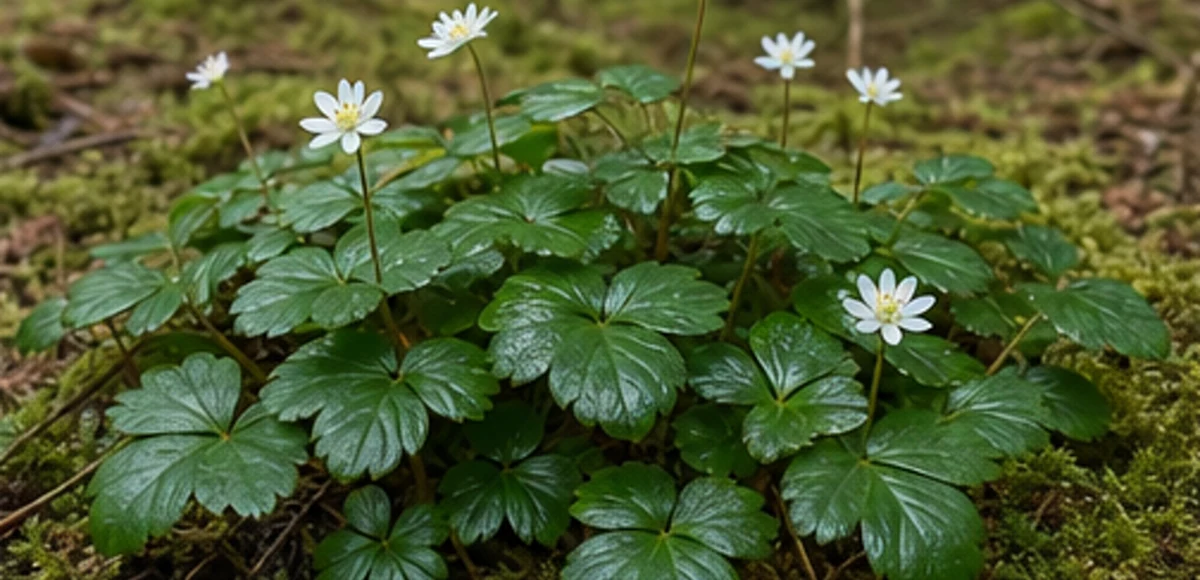
Goldthread
Coptis groenlandica or C. trifolia
three-leaf goldthread, canker root
Reviewed by Églantine Vignon, Master Herbalist, on
How to identify goldthread
What to check before harvesting or using it.

A perennial plant about 10 cm tall.
Traditional uses of goldthread
- Digestive
- Skin and integumentary
- Immune and lymphatic
Goldthread, a small woodland plant with golden-yellow roots, has a long medicinal history in North America. Its bitter rhizome, rich in berberine, is best known for the mouth and gums, and as a bitter tonic for digestion. Tradition also credits it with supporting the body's defences.
Good to know
Use it for short periods, because it makes the liver work hard. It can also increase stomach acidity. During pregnancy and breastfeeding, and for young children, avoid it.
Goldthread in the garden
- Sun exposure
- Shade to partial shade, ideally in a cool understorey
- Soil
- Cool to moist, acidic, rich in organic matter, often peaty or mossy
Sources
- Plant profiles from the course “Wild Medicinal Plants”, eJardin Academy