
Cleavers
Galium aparine
goosegrass, catchweed bedstraw, sticky willy, clivers
Reviewed by Églantine Vignon, Master Herbalist, on
How to identify cleavers
What to check before harvesting or using it.

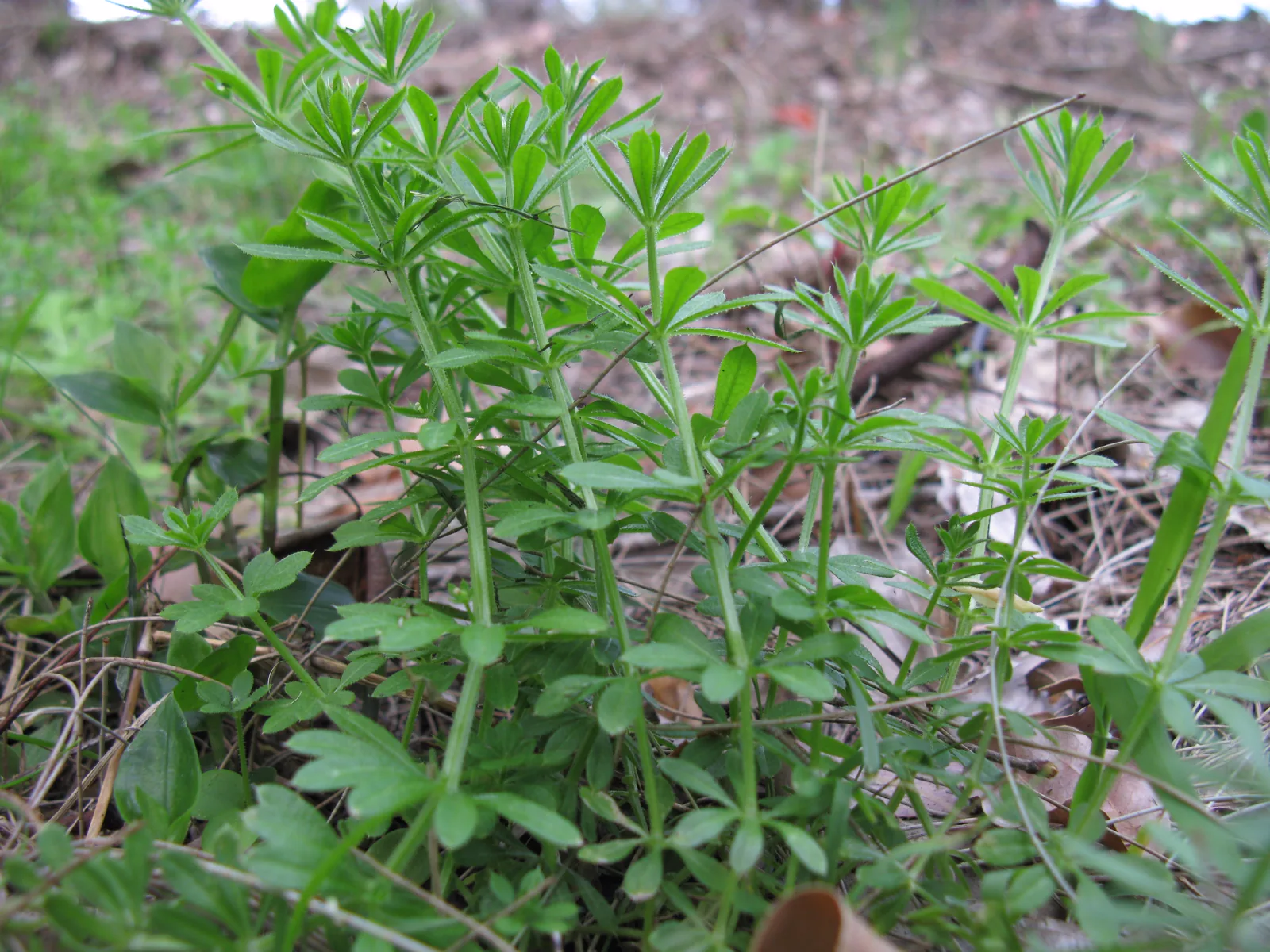
Cleavers grows in fields, dry meadows, thickets and urban vacant lots, and can make do with little light. It is a rough, clingy plant, like Velcro, that catches on clothing and on neighbouring plants.
- Stem
- The many square, rough stems, brittle when mature, can grow longer than a metre; they climb by hooking onto other plants, or else lie along the ground.
- Leaves
- Its small oblong, toothed leaves, 1 to 6 centimetres long, are arranged in whorls around the stem and carry tiny prickles that point downward.
- Flowers
- The tiny white, pinkish or greenish fragrant flowers are grouped in small branched clusters (cymes) at the stem tips and where the leaves join the stem.
- Fruit
- Small round fruits in pairs, green and then black when ripe. Covered in tiny hooks, they catch on clothing and animal fur.
- Do not confuse with
- There are more than three hundred species of bedstraw, and several look alike. Cleavers is recognized by touch: it is rough and clings like Velcro.
Traditional uses of cleavers
- Urinary and renal
- Immune and lymphatic
- Skin and integumentary
- Digestive
Cleavers, the plant that sticks to your clothes, is traditionally linked to the lymphatic system. A depurative, it helps the lymph circulate. It is also used for urinary drainage and, externally, for the skin. It is used fresh, because drying makes it lose a good part of its properties.
Good to know
Use it for short periods. During pregnancy, or if you have large kidney stones or weak kidneys, avoid it, and ask for advice if you take an anticoagulant. Contact with it irritates some people's skin.
Sources
- Plant profiles from the course “Managing Garden Weeds as Valuable Allies”, eJardin Academy