
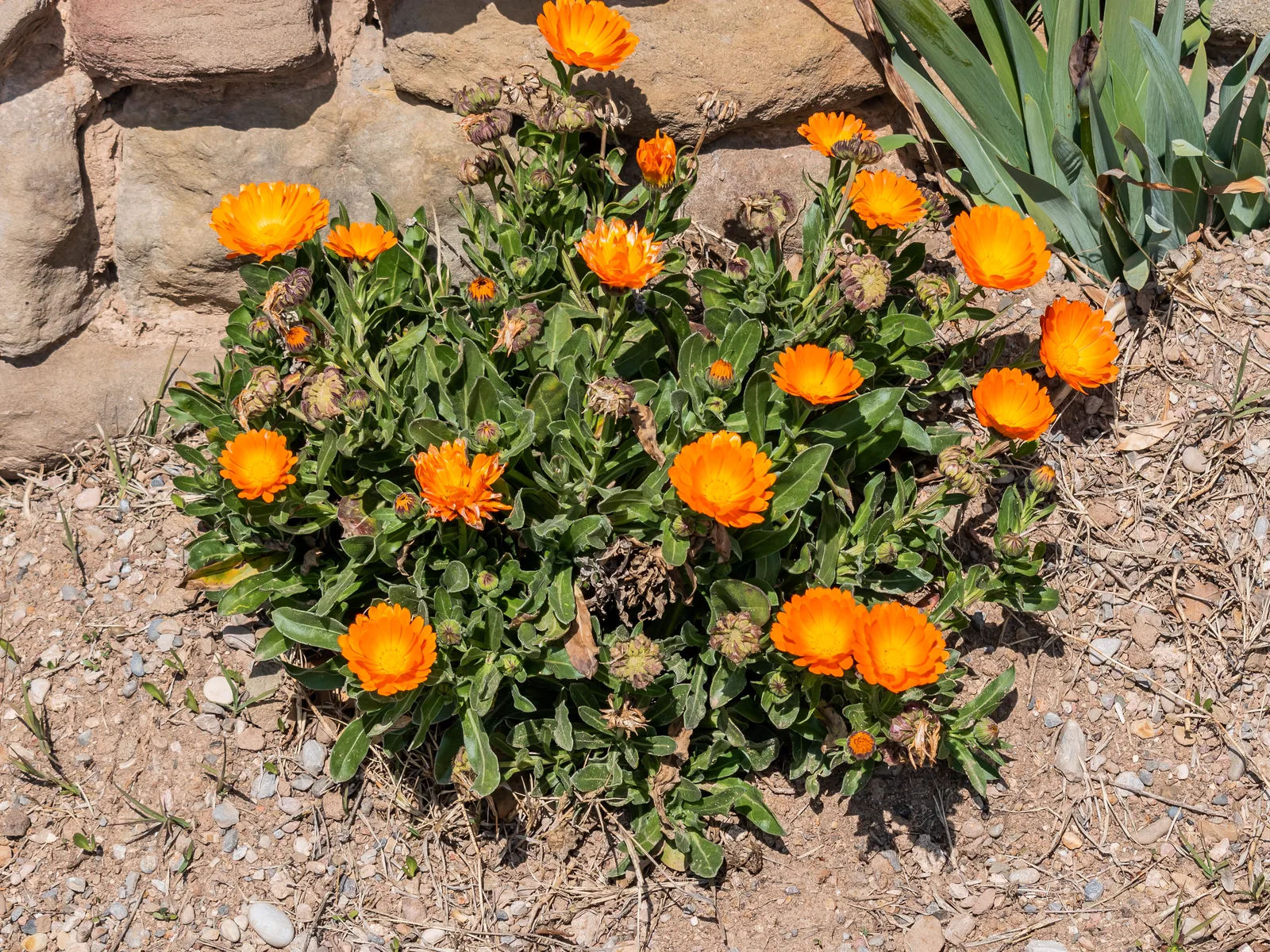
Calendula
Calendula officinalis
Calendula or pot marigold
Reviewed by Églantine Vignon, Master Herbalist, on
How to identify calendula
What to check before harvesting or using it.

Annual plant about 30 cm tall.
Traditional uses of calendula
- Skin and integumentary
- Digestive
- Immune and lymphatic
- Reproductive
Calendula is the plant for life's little scrapes. Its orange flowers are traditionally used on cuts, minor burns and irritated skin, for their skin-repairing and soothing properties. It is often found as an oil or an ointment. Herbalists also associate it with stomach comfort and good lymph circulation.
Good to know
Calendula encourages menstruation: it is best avoided during pregnancy.
Calendula in the garden
- Sun exposure
- Full sun or partial shade
- Soil
- Rich in organic matter, fertile
- Hardiness zone
- 2
Sources
- Plant profiles from the course “Medicinal Plants in the Garden”, eJardin Academy