
5 edible and medicinal roots native to North America
The Natural Pharmacy North America’s natural pharmacy is not limited to leaves, flowers or berries. Several roots appear in food and herbal traditions. Some are still being studied; others require strict caution.
Medicinal roots contain bioactive compounds. Safe use begins with reliable botanical identification, responsible harvesting and a careful review of contraindications and interactions.
This guide outlines five roots that are often associated with a Natural Pharmacy : wild yam, goldenseal, American ginseng, echinacea and sassafras. The goal is not to recommend them to everyone. It is to better understand their uses, their limits and safety issues.
Learn with eJardin
The eJardin Academy offers online training courses on herbalism, wild medicinal plants, botanical identification and natural preparations. Understanding a Natural Pharmacy requires more than a list of plants. You have to learn the botanical families, the parts used, the risks of confusion and the limits of use.
Good training also helps to think about harvesting. Some plants are rare, susceptible to overexploitation or protected depending on the region. Buying a plant grown from a reliable source can be more responsible than taking it from the wild.
If you are looking for a serious online school to learn herbal medicines, eJardin offers a structured way to learn at your own pace, with solid foundations and a cautious approach.
Why Roots Matter in Herbalism
The roots anchor the plant in the soil. They also store reserves, sometimes active compounds that are of interest to herbalists. This is one reason why several traditions have incorporated them into their Natural Pharmacy.
But a root is not harvested like a leaf. Removing the root often kills the plant or greatly weakens the local population. This is an important point for goldenseal, ginseng, and several slow-growing wild species.
Before picking, it is important to know if the plant is abundant, if harvesting is allowed and if a cultivated option exists. In responsible herbalism, ethics is part of the practice.
1. Wild yam
Wild yam (Dioscorea villosa) is a climbing plant whose root has been used in some traditional uses related to female comfort. It is sometimes cited for menstrual pain, menopausal discomfort or tension in the lower abdomen.
In a Natural Pharmacy, the wild yam must be presented with nuance. It does not contain progesterone that is ready to act in the human body. Some chemical transformations are possible in the laboratory, but this does not mean that an herbal tea produces the same effect as a hormone.
It is mainly found in decoctions, tinctures or commercial preparations. People who are pregnant, breastfeeding, on hormone therapy or monitored for a hormone-dependent condition should seek advice before use.
2. Goldenseal
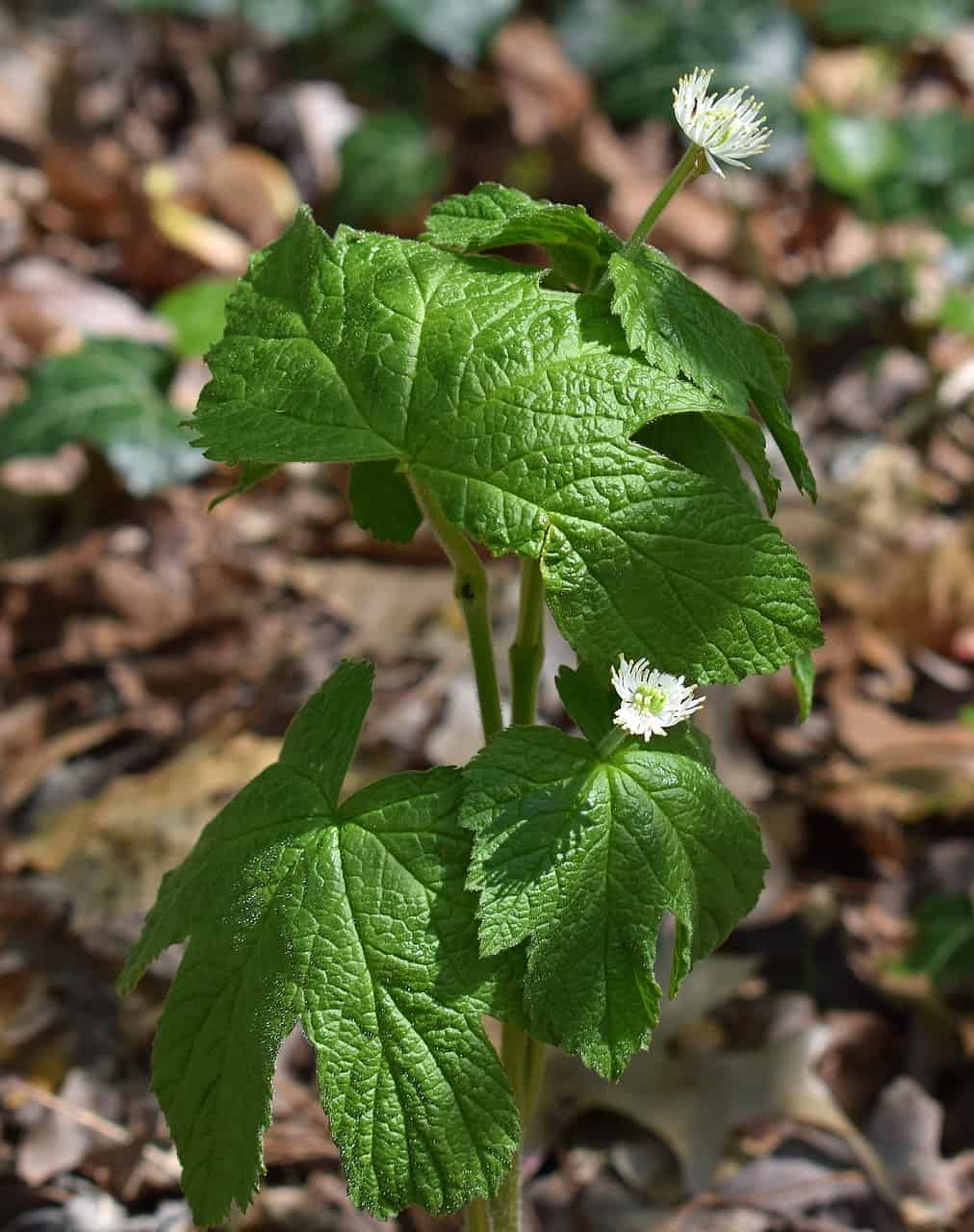
Goldenseal (Hydrastis canadensis) is known for its yellow, bitter root and its berberine content. Traditional uses are not proof that it treats a condition, and internal use requires particular caution.
Goldenseal occupies a delicate place in the Natural Pharmacy. On the one hand, its history of use is rich. On the other hand, the plant has suffered from overexploitation, and its compounds can interact with certain drugs.
For this reason, goldenseal is not suitable for improvised use. Use in newborns should be avoided and advice should be sought in case of pregnancy, breastfeeding, chronic illness or drug treatment.

3. American Ginseng
American ginseng (Panax quinquefolius) is one of North America’s best-known roots. Some standardized products have been studied, but their results cannot be generalized to every preparation or every use.
In a Natural Pharmacy, American ginseng is often classified as an adaptogenic herb. The word should be used with caution: it does not mean that the plant is suitable for all fatigues or that it replaces a medical evaluation.
Ginseng can influence blood sugar, blood pressure, sleep, or interact with certain medications. People who are taking blood thinners, diabetes treatments, stimulants, or multiple medications should seek advice.

4. Echinacea
Echinacea (Echinacea spp.) is a well-known plant in medicinal gardens. Depending on the species, the root, the aerial parts or both are used. It is often associated with natural defenses and seasonal discomforts.
It has its place in a Natural Pharmacy but not as an automatic reflex. Extracts vary greatly depending on the species, the plant part, the extraction method, and the quality of the product.
Caution should be exercised in people who are allergic to Asteraceae, people with autoimmune diseases or those taking immunosuppressive treatments. In case of high fever, long-lasting symptoms or severe infection, you should consult a doctor.
5. Sassafras
The sassafras (Sassafras albidum) has marked the history of certain aromatic drinks, including root beer. Its root bark has a recognizable smell, but its internal use raises safety concerns.
In a Natural Pharmacy, sassafras should be treated with great caution. The presence of safrole in some parts of the plant has led to dietary restrictions and the abandonment of many internal traditional uses.
For family use, it is best to avoid uncontrolled internal preparations of sassafras. So-called "safrole-free" products fall under a different framework and must be evaluated according to their source, quality and local regulations.
Responsible Harvesting and Conservation
A medicinal root takes time to form. Some plants take several years to reach a useful size. Picking without knowing the local population can harm the species.
To build a Natural Pharmacy responsibly, favour cultivated plants, transparent suppliers and limited harvests. Avoid rare, endangered or already pressured species in your area.
Once harvested or purchased, the roots should be well dried, labelled, and kept away from moisture, light, and insects. Always write down the Latin name, the part used, the date, and the source.
Precautions with medicinal roots
Medicinal roots are often more concentrated than leaves or flowers. They can affect the liver, digestion, nervous system, blood sugar, coagulation or hormones. Caution is therefore not a detail.
- Identify the plant with certainty before any harvest.
- Use the Latin name to avoid confusion between common names.
- Check for possible drug interactions.
- Avoid self-medication during pregnancy and breastfeeding.
- Respect rare or endangered species and favor cultivated sources.
- Do not replace a treatment with a plant without professional advice.
- Discontinue a plant if there is an unusual reaction.
Conclusion
The Natural Pharmacy of North America shows how rich roots can be in history, uses and precautions. Wild yams, goldenseals, American ginseng, echinacea and sassafras are not all at the same level of safety.
Some roots can support careful family practice. Others call for a tighter framework, a controlled source, or complete abstention for internal use. This is where herbalism becomes serious: knowing how to use, but also knowing how to give up.
To build your Natural Pharmacy, start by learning about plants, their Latin names, their potential for confusion, their ecological status, and their possible interactions. Knowledge protects as much as the plant itself.
FAQ – Natural Pharmacy and Medicinal Roots
What is a Natural Pharmacy?
A Natural Pharmacy refers to a set of plants, preparations and knowledge used to support certain everyday discomforts. It is not a substitute for a medical pharmacy or professional follow-up.
What medicinal roots from North America are known?
Often-cited roots include wild yam, goldenseal, American ginseng, echinacea, and sassafras. Their uses and precautions vary greatly.
Is goldenseal safe?
Goldenseal should be used with caution. It may interact with certain medications and is not suitable for many situations, including newborns, during pregnancy or breastfeeding.
Is American ginseng suitable for everyone?
No. American ginseng can be a problem with certain medications, blood sugar, blood pressure or sleep disorders. Professional advice is preferable in case of treatment.
Can you use sassafras in herbal tea?
Caution is advised. Some parts of the sassafras may contain safrole, a substance associated with dietary restrictions. In-house preparations should be avoided.
Do you have to pick the medicinal roots yourself?
Not necessarily. Several wild roots are susceptible to overexploitation. Cultivated, well-identified, and traceable sources are often preferable.
Why train before using medicinal roots?
Training helps to understand botanical identification, parts used, dosages, contraindications, interactions, and responsible harvesting.