
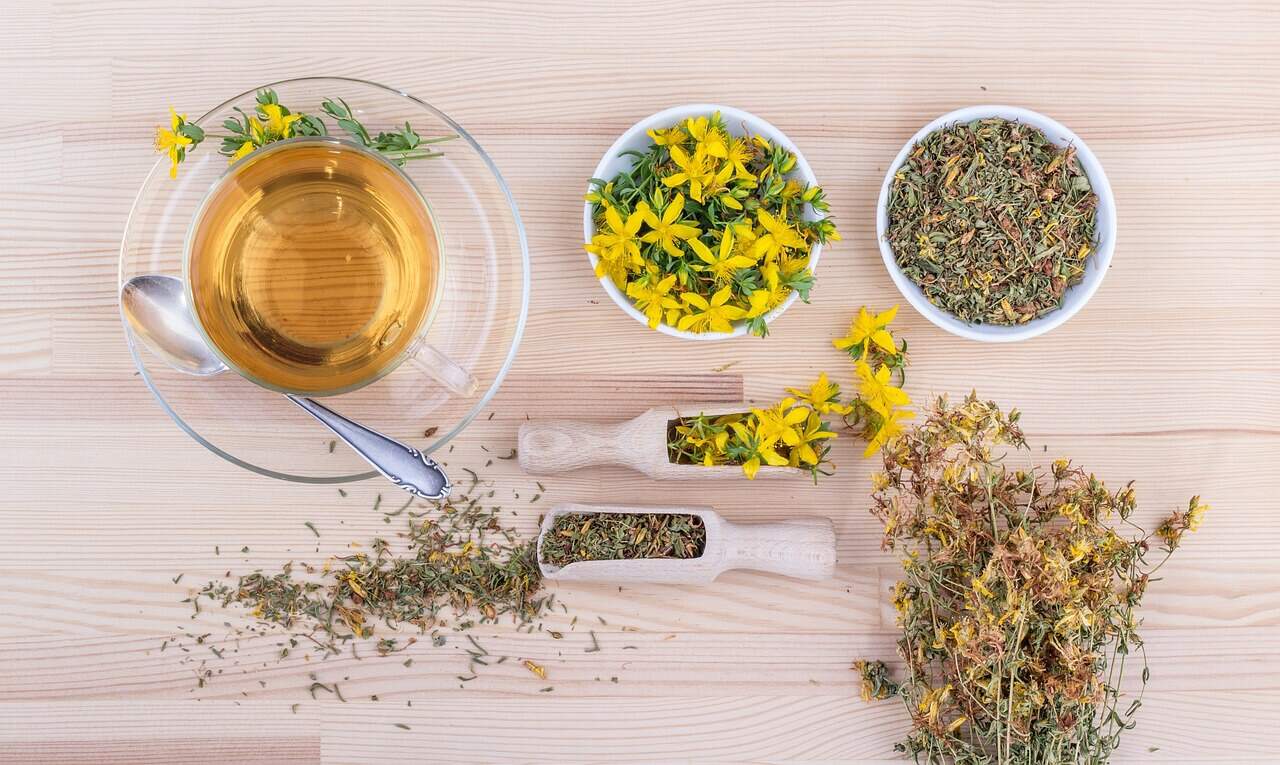
Using medicinal plants safely: a beginner’s guide
Many people today want to use plants for the small discomforts of everyday life: slow digestion, stress, disturbed sleep, sore throat, temporary fatigue or sensitive skin. This desire is understandable. Plants have been a part of family care for a long time.
But Using medicinal plants safely does not mean replacing medicine, nor does it mean using a herbal tea or essential oil at random. A plant can be useful in one context and not recommended in another. The choice of plant, the form used, the dose, the duration and the person involved change everything.
This guide will cover the basics: when plants can help, what forms to use, what plants to know to start with, and what precautions to take. The objective is simple: to practice with more discernment.
Learn with eJardin
If you want to use medicinal plants methodically, eJardin offers online training courses suitable for adults. The school covers identification, herbal teas, tinctures, essential oils, external preparations, precautions and the manufacture of natural products.
This progression helps to move from scattered advice to a more structured practice. You learn how to choose a plant, understand its limits and prepare simple products without relying only on recipes found online.
If you are looking for a serious online school to learn herbalism, eJardin offers a structured way to learn at your own pace, with solid foundations and a cautious approach.
Why use medicinal plants?
Medicinal plants have accompanied humans long before the appearance of modern medicines. Some molecules used in pharmacy come from elsewhere in the plant world or are inspired by it. This does not mean that plants replace medicines, but that they have a real place in the history of care.
At home, they are especially useful for simple situations: slow digestion, temporary nervousness, fragile sleep, a sore throat or a small skin irritation. They can also help to set up routines: evening tea, foot bath, macerate for the skin or mineralizing infusion.
The important point is the limit. Plants are best suited for small imbalances, prevention and support in everyday life. For a chronic illness, severe pain, persistent fever or a new symptom, you should consult a doctor.
The basics to know before you start
Each plant has its own profile
A plant is not "good for everything". It has uses, parts used, methods of preparation and precautions. Chamomile, thyme, nettle or peppermint are not used in the same way.
Quality matters
A plant that is not properly dried, stored or harvested in a polluted place loses its interest and can be a problem. For family use, choose plants that are well identified, clean, properly dried and stored away from humidity, light and heat.
Shape changes the effect
A mild herbal tea, a concentrated tincture, a hydrosol and an essential oil do not have the same strength. The same plant can be very accessible in infusion, but much more delicate in the form of an essential oil.
Dose and duration matter
More is not better. Some plants are suitable for a few days, others can be taken longer. Dosages vary according to age, weight, sensitivity, health context and current treatments.
The main forms of preparation
Infusion
The infusion is especially suitable for flowers, leaves and flowering tops. Simmering water is poured over the plant, covered, and then filtered after a few minutes. It is often used for calming, digestive, or respiratory plants.
Decoction
The decoction is used for the harder parts: roots, bark, seeds. The plant is placed in cold water, brought to a boil, and then gently held before filtration. This method is best suited when compounds are more difficult to extract.
Dyeing
The tincture is a hydroalcoholic extract. It is taken in small quantities, usually diluted in a little water. It is practical, but more concentrated than herbal tea. It is not suitable for all people.
Oily macerate, balm and poultice
External preparations are mainly used for the skin, muscles and joints. An oily macerate can then be used to make a balm. Even when used externally, allergies, skin condition and plant quality should be checked.
Hydrosol
Hydrosols are aromatic waters resulting from distillation. They are often milder than essential oils. They can be used as skin care, compresses or in certain supervised uses.
Essential oils
Essential oils are highly concentrated. They require real caution: dilution, contraindications, age, pregnancy, breastfeeding, asthma, epilepsy and possible interactions. To start, herbal teas and simple preparations are often more suitable.
8 useful plants to start with
Chamomile
Chamomile often accompanies relaxation, nervous digestion and evening routines. It is mainly prepared as a short infusion of flowers.
Lemon Balm
Lemon balm is appreciated when stress affects digestion or sleep. Its lemony taste makes it a pleasant herbal tea for everyday use.
Linden
Linden flowers and bracts are used to promote calmness, accompany sleep and support general comfort during small febrile episodes.
Peppermint
Peppermint often helps with slow digestion or heaviness after meals. However, it may not be well tolerated in the event of marked reflux. Its essential oil requires more caution than infusion.
Thyme
Thyme is a classic of the cold season. In a short infusion, it accompanies mild respiratory discomfort and slow digestion. Its powerful taste invites you to use it with moderation.
Nettle
Nettle is rich in minerals and often used as a background support during temporary fatigue. It can be taken as an infusion or as a soup, pesto or soup.
True Lavender
True lavender is associated with relaxation and nervous comfort. It can be used as a light infusion, as a hydrosol or in very moderate diffusion depending on the profile.
Plantain
Plantain is useful to know for minor skin irritations and mild respiratory discomfort. It can be prepared as a herbal tea, syrup, oily macerate or poultice of well-identified fresh leaves.
Video: Nettle Identification
Before harvesting nettle, you need to know how to identify it correctly. This video shows the basic landmarks for observing it in its natural environment.
3 simple everyday uses
Evening Herbal Tea
An infusion of chamomile, lemon balm and lime blossom can accompany an evening routine. The moment matters as much as the plant: softer light, screens off, hot cup, return to calm.
Oily macerate of plantain
Plantains harvested in a clean area can be slightly wilted and then macerated in vegetable oil. After filtration, the oil can be used as is or used in a simple balm for minor irritations.
Long nettle infusion
A good quality nettle infusion provides progressive mineral support. It is not an instant cure. It is rather a base plant, to be integrated into an adapted routine.
General precautions
Medicinal plants can be useful, but they are not harmless. The word natural does not guarantee the absence of risk.
- check for possible interactions with medications;
- avoid self-medication during pregnancy and breastfeeding;
- adapting uses for children and the elderly;
- respect the dosages, durations and forms of preparation;
- do not use a wild plant without certain identification;
- Consult a doctor if you have severe pain, persistent fever or new symptoms.
When to consult a professional?
Herbs are best suited for simple discomforts and supportive routines. Some situations require immediate medical advice: symptoms that last, severe pain, high fever, respiratory disorder, neurological disorder, chronic disease, complex treatment, pregnancy, breastfeeding or a problem in a young child.
In these cases, herbalism can sometimes accompany the follow-up, but it should not become the only answer. A health professional can assess the situation, make a diagnosis and check the risks of interactions.
Reliable References and Resources
To verify information on medicinal plants, it is best to rely on recognized sources. World Health Organization monographs, Health Canada resources, ANSES advisories and scientific bases such as PubMed can help cross-reference data.
Before buying a book or following a recipe, also look at who writes: training, experience, sources cited and level of caution. A good resource explains the uses, but also the limitations.
Some useful resources: WHO monographs on herbal medicines, Natural Health Products from Health Canada, ANSES resources on medicinal plants and PubMed.
Conclusion
Treating yourself with plants requires more than a recipe. You have to know the plant, its preparation, its limits and the person's context. A simple herbal tea can be very useful, but it should be chosen with discernment.
To begin with, keep your practice sober: a few well-identified plants, simple preparations, reasonable doses, and constant attention to the body's signals. This is how family herbalism becomes a concrete help, without exaggerated promises.
FAQ – Using medicinal plants safely
Can we really treat ourselves with plants?
Plants can accompany some simple discomforts of everyday life. They are not a substitute for a necessary medical diagnosis or treatment.
Which plants to choose to start with?
Chamomile, lemon balm, lime blossom, thyme, nettle, plantain, peppermint and true lavender are often used in family herbalism.
Are medicinal plants safe?
No, not automatically. Some plants may be contraindicated, interact with medications or be unsuitable for certain profiles.
Which form to use: herbal tea, tincture or essential oil?
Herbal tea is often the most accessible form to start with. Tinctures are more concentrated, and essential oils require stricter precautions.
When should you consult instead of using plants?
Consultation should be sought if you have a significant or persistent or new symptom, severe pain, high fever, chronic illness, pregnancy, breastfeeding or complex medical treatment.
Why train in herbalism?
Training helps to identify plants, choose the right preparations, understand dosages and avoid frequent mistakes.
Why choose eJardin to learn medicinal plants?
eJardin offers structured online training courses on herbalism, identification, natural preparations, safety of use and the manufacture of natural products.
Choosing a plant according to your need
Choosing a plant starts with a simple question: what are you looking to go with? Nervous tension does not require the same herb as slow digestion or irritated skin.
For stress and nervousness, we often think of lemon balm, chamomile or lavender. For digestion, peppermint, chamomile, and thyme may be helpful depending on the context. For small winter discomforts, thyme, lime blossom and plantain are often chosen. For mineral support, nettle keeps an interesting place.
These benchmarks remain general. The individual field matters a lot: age, digestion, medications, pregnancy, allergies, nerve sensitivity or medical history. A well-chosen plant always respects the person as much as the symptom.