
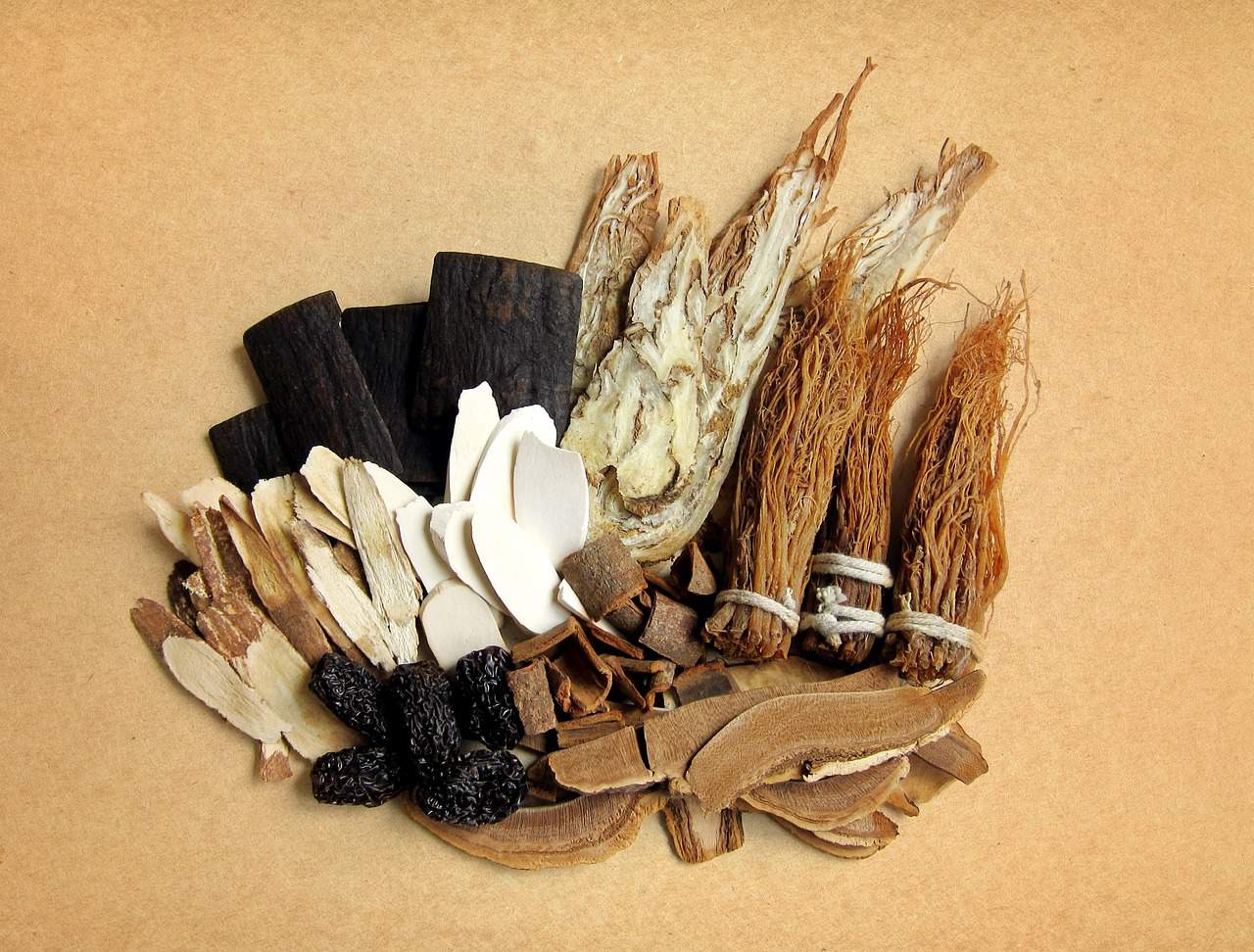
Traditional Chinese medicine and herbalism: 6 key concepts
The Traditional Chinese Medicine is an ancient medical system that includes several practices: pharmacopoeia, acupuncture, dietetics, movements, breathing and observation of the field. Herbalism occupies an important place, but it is not just about choosing a plant because it is "good for" a symptom.
In this system, plants are often used in formulas. The practitioner takes into account the constitution, the signs observed, the context of life, the season and the imbalances described by the Chinese tradition. This way of reasoning differs from Western herbalism, even though both approaches use medicinal plants.
This article presents the basics of Traditional Chinese Medicine without promising medical results. Chinese plants can interact with medications, vary in quality, and may not be suitable for some people. Caution is therefore necessary, especially in self-medication.
Learn with eJardin
If you want to understand the links between herbalism, medicinal plants and traditional approaches, eJardin offers online training courses suitable for adults. The school covers botany, herbal teas, macerates, balms, essential oils, safety of use and the limits of advice.
Serious training helps to read traditions with hindsight. It makes it possible to distinguish between a traditional use, a hypothesis, a scientific fact, a precaution and a contraindication. This distinction is useful when one discovers Traditional Chinese Medicine or any other medicinal tradition.
If you are looking for a serious online school to learn herbalism, eJardin offers a structured way to learn at your own pace, with solid foundations and a cautious approach.
Some historical landmarks
Traditional Chinese Medicine is based on a long history of texts, observations and practices. In the tradition, Shennong is often presented as a founding figure linked to the knowledge of plants. He is a mythical figure, not a historical source in the modern sense.
Classic texts, such as the Huangdi Neijing, have structured part of the Chinese medical vocabulary: circulation of Qi, balance of Yin and Yang, observation of organs according to tradition and role of the season. These concepts must be understood in their cultural and medical context.
An important point
Chinese tradition does not use plants as a simple list of "natural remedies". It classifies them according to their own criteria: hot or cold nature, flavour, direction of action, organs or associated meridians.
Yin, Yang, Qi and Five Movements
Traditional Chinese Medicine uses a specific vocabulary to describe the balance of the body. Yin and Yang do not designate two substances, but two complementary poles: rest and activity, cold and heat, interior and exterior, matter and movement.
Qi is often translated as "energy", but this translation remains incomplete. In traditional practice, it is used to talk about circulation, function, breath and vitality. The five movements, sometimes called the five elements, serve to organize the relationships between wood, fire, earth, metal and water.

The role of medicinal plants
In Traditional Chinese Medicine, plants are often assembled into formulas. A formula can contain a main plant, support plants, action-orienting plants, and plants that moderate certain effects. This logic requires precise training.
The Chinese pharmacopoeia does not only choose a plant for a symptom. Two people with fatigue, for example, may receive different advice if their terrain, digestion, sleep, or signs of heat and cold are not the same.
This is one of the points that makes self-medication tricky. Buying a Chinese plant isolated because it is popular may be unsuitable if the person's land has not been evaluated.
Examples of plants often cited
Some plants often come up in books and courses related to Traditional Chinese Medicine. They should not be used randomly. The examples below are intended to understand the general logic, not to establish a prescription.

| Plant | Oft-cited traditional usage | Caution |
|---|---|---|
| Ginseng | Tone support in certain traditional contexts | May not be suitable for hypertension, insomnia, or drug therapy. |
| Ginger | Digestive heat, internal cold according to traditional reading | Use with caution in case of severe reflux or anticoagulant therapy. |
| Licorice | Formula harmonization, traditional digestive support | May increase blood pressure or interact with certain medications. |
| Astragalus | Support from the field in certain traditional formulas | Caution should be exercised in the event of autoimmune disease or immunosuppressive therapy. |
Differences with Western herbalism
Western herbalism often classifies plants into families of action: bitter, digestive, expectorant, soothing, astringent, emollient or tonic. This classification can be based on traditional uses, known constituents and clinical observation.
Traditional Chinese Medicine uses a different grid. It looks at the thermal nature, flavor, direction of effect, associated meridians, and the plant's role in a formula. The two approaches can dialogue, but they do not always speak the same language.
Simple example
A "warming" plant in the Chinese tradition will not be chosen in the same way for a person showing signs of heat as for a person who is cold, tired and slowed down.
Research, quality and safety
Modern research is interested in certain practices and plants from Traditional Chinese Medicine. But the results vary depending on the plants, formulas, study methods and the quality of the products used. Therefore, general phrases such as "science has confirmed the benefits of TCM" should be avoided.
Safety also depends on quality. Products can be contaminated, misidentified, adulterated or incorrectly dosed. Interactions with medications are also possible, especially with blood thinners, blood pressure treatments, immunosuppressive therapies or certain liver medications.
In Canada, natural health products are regulated by Health Canada. This framework does not remove all caution, but it does help to verify labelling, quality and permitted claims.
How to incorporate these principles with caution
A curious person can be inspired by Traditional Chinese Medicine without prescribing formulas. Starting with observation is safer: sleep, digestion, coldness, heat, fatigue, appetite, reactions to food, pace of life and tolerance to plants.
Chinese dietetics can also be approached gently, without rigidity. Some people are more observant of their relationship to hot, cold, raw food, cooked food or spices. This remains a personal approach, which must remain compatible with real nutritional needs.
For plants, it is best to consult a competent practitioner, especially if a Chinese formula contains several ingredients. The more complex the formula, the greater the risk of error, interaction, or misadaptation.
Important precautions
Traditional Chinese Medicine can be studied with interest, but its practical use requires a framework. Chinese plants are not just wellness supplements. Some are powerful, some are contraindicated, and some require personalized evaluation.
- Do not replace a medical treatment with herbs without professional advice.
- Avoid self-medication with complex Chinese formulas.
- Seek advice if you are pregnant, breastfeeding, have a chronic illness or are taking medication.
- Check the quality, provenance and labelling of the products.
- Avoid products without a clear composition or identifiable manufacturer.
- Always report the plants used to your doctor or pharmacist.
- Discontinue use and seek advice if an unusual reaction occurs.
Useful sources
To verify information on Traditional Chinese Medicine, choose sources that also talk about safety, quality, interactions and limitations. Promotional sources rarely give a complete view.
Conclusion
Traditional Chinese Medicine offers a particular way of understanding the terrain, imbalances and the role of plants. It has its own vocabulary, its own logic and its limits. Chinese herbalism should not be reduced to a list of plants to buy.
To study it seriously, we must keep two ideas together: respect tradition and check safety. A plant can be traditional, but still unsuitable for a person, a dose or a medical situation.
FAQ – Traditional Chinese Medicine and Herbalism
What is Traditional Chinese Medicine?
Traditional Chinese Medicine is a traditional medical system that includes pharmacopoeia, acupuncture, dietetics, body exercises, and field observation.
What place do plants occupy in TCM?
Plants are often used in formulas, according to a logic that takes into account the soil, the nature of the plant, its flavor, its orientation and its role in the preparation.
Can you use Chinese plants alone at home?
It is better to avoid self-medication with complex formulas. Some plants may interact with medications or may not be suitable for your situation.
Is TCM scientifically proven?
Some practices and plants are studied, but the data vary according to the methods, products and indications. General statements should be avoided and every usage should be verified.
What is the difference with Western herbalism?
Western herbalism often classifies plants by actions and constituents. Traditional Chinese Medicine uses a grid based on Qi, Yin, Yang, flavors, thermal nature, and formulas.
What risks should you be aware of?
Risks include drug interactions, contaminated products, misidentification, contraindications, and the use of an unsuitable formula.
Why choose eJardin to learn herbalism?
eJardin offers online training courses on medicinal plants, botany, natural preparations, safety and the basics of herbalism.