
Red clover
Trifolium pratense
Based on the courses of Églantine Vignon, Master Herbalist Updated
How to identify red clover
What to check before harvesting or using it.

Biennial or perennial plant (lives 3 to 5 years), 20 to 40 cm tall.
- Leaves
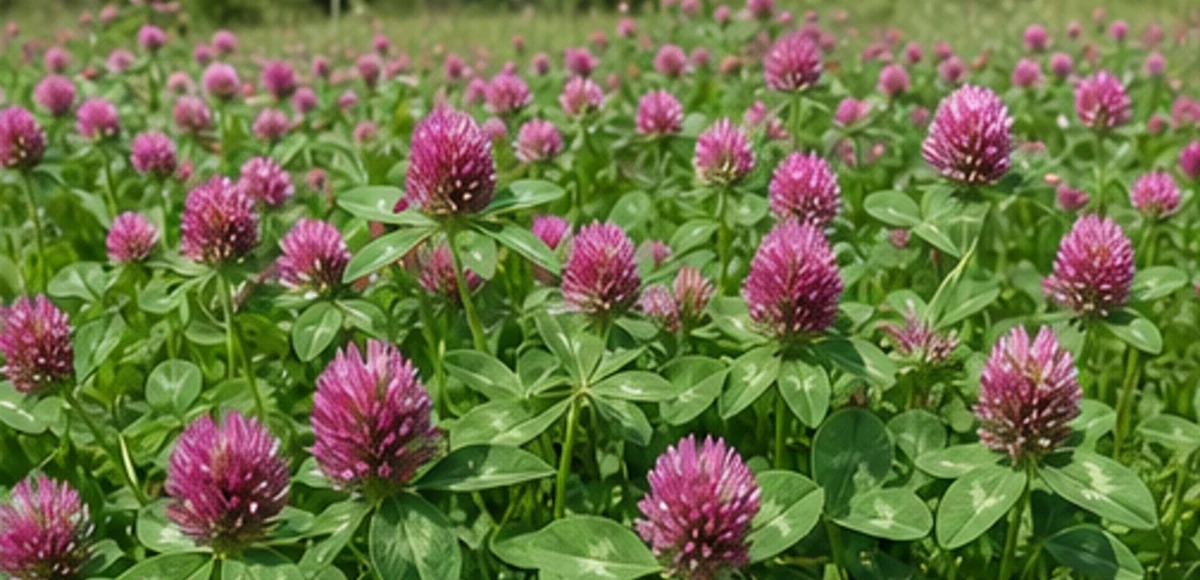
- The leaves are oval and arranged in groups of 3; they are green, with white markings in the middle.
- Flowers
- The flowers are pink to mauve, grouped in a flower head; there are on average 120 flowers per head.
- Do not confuse with
- White clover must never replace red clover: it contains hydrocyanic acid, which is toxic. White clover lies flat and roots as it creeps; its flower heads, white or barely pinkish, are borne on a long stalk. Red clover is upright and hairy; its large purple heads have almost no stalk and sit at the tips of the stems.
Red clover in the garden
- Sun exposure
- Sun
- Hardiness zone
- Red clover's hardiness zone range is very wide, from 3B to 9
Sources
- Plant profiles from the course “Medicinal Plants in the Garden”, eJardin Academy