
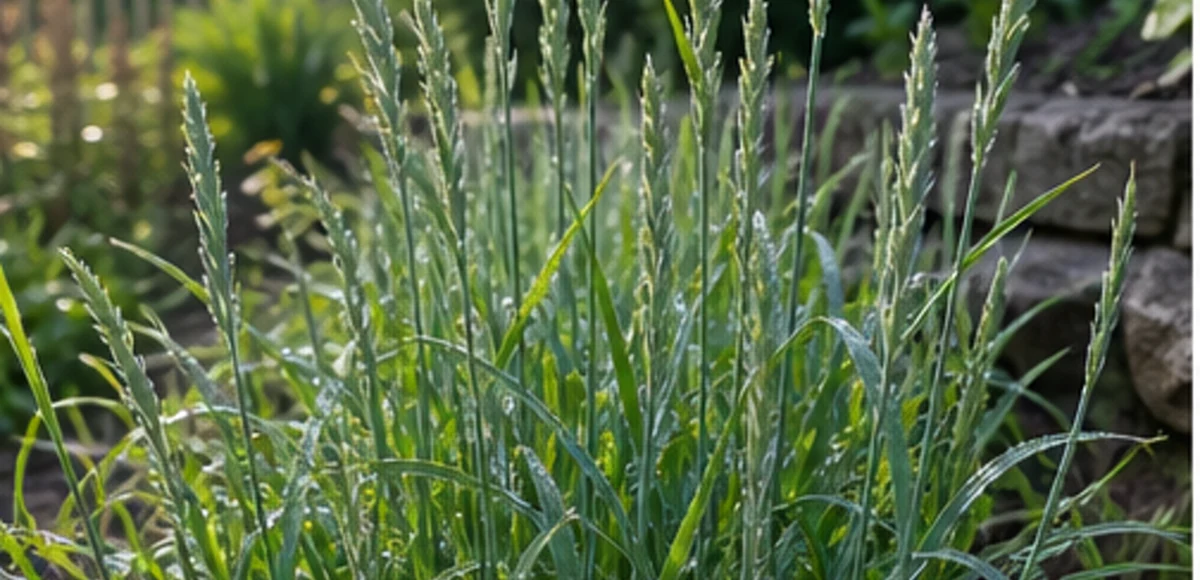
Quackgrass
Elymus repens (formerly Agropyron repens)
Common quackgrass, couch grass
Based on the courses of Églantine Vignon, Master Herbalist Updated
How to identify quackgrass
What to check before harvesting or using it.

Quackgrass is a perennial grass naturalized almost everywhere, common in sunny fields, vacant lots, sidewalk edges and gardens.
- Leaves
- Its bright green leaves are mostly hairless, narrow, elongated and finely pointed; they are reddish at the base, a little rough on the surface and sharp along the edges. The distinctive sign to check at the collar is the presence of small, narrow auricles, like hooks, that clasp the stem at the base of the blade.
- Fruit
- The grains are elongated, lance-shaped, flattened at the top and measure 8 to 9 mm. They are straw-coloured or brown, sometimes greyish.
- Do not confuse with
- Its whitish rhizomes and the small auricles at the leaf collar distinguish quackgrass from most other grasses. It does not form clumps: it spreads through its many rhizomes. Ryegrasses (Lolium spp.), more common in warm climates, also have a simple spike, with five to thirty-five alternate spikelets.
Sources
- Plant profiles from the course “Managing Garden Weeds as Valuable Allies”, eJardin Academy