Based on the courses of Églantine Vignon, Master Herbalist · Updated
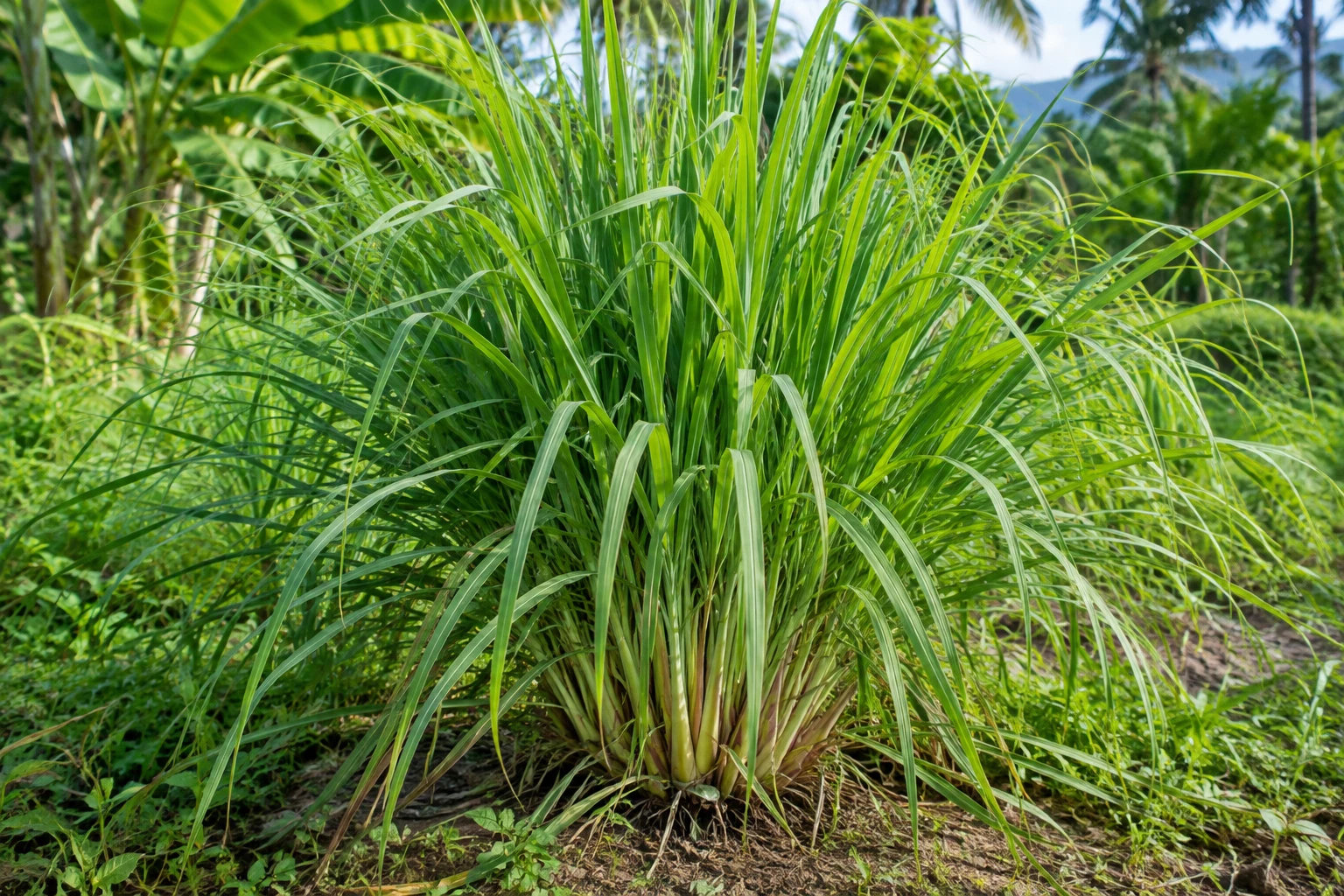
Lemongrass is a large perennial herbaceous plant that forms dense clumps, usually 1 to 1.5 metres tall, and taller depending on growing conditions.
- Stem
- The stems are often short, thick at the base and partly underground. They send out creeping rhizomes that allow the plant to spread.
- Leaves
- Its long, linear, tapering leaves are bright green, slightly rough to the touch, and give off a strong lemon scent when crushed.
- Flowers
- Flowers are rare in cultivation; when they do appear, they are small and gathered in terminal, panicle-shaped inflorescences.
- Roots
- The base of the stems, short and thick, is half buried. It produces short creeping rhizomes that enlarge the clump.
Sources
- Plant profiles from the course “Tropical Medicinal Plants”, eJardin Academy