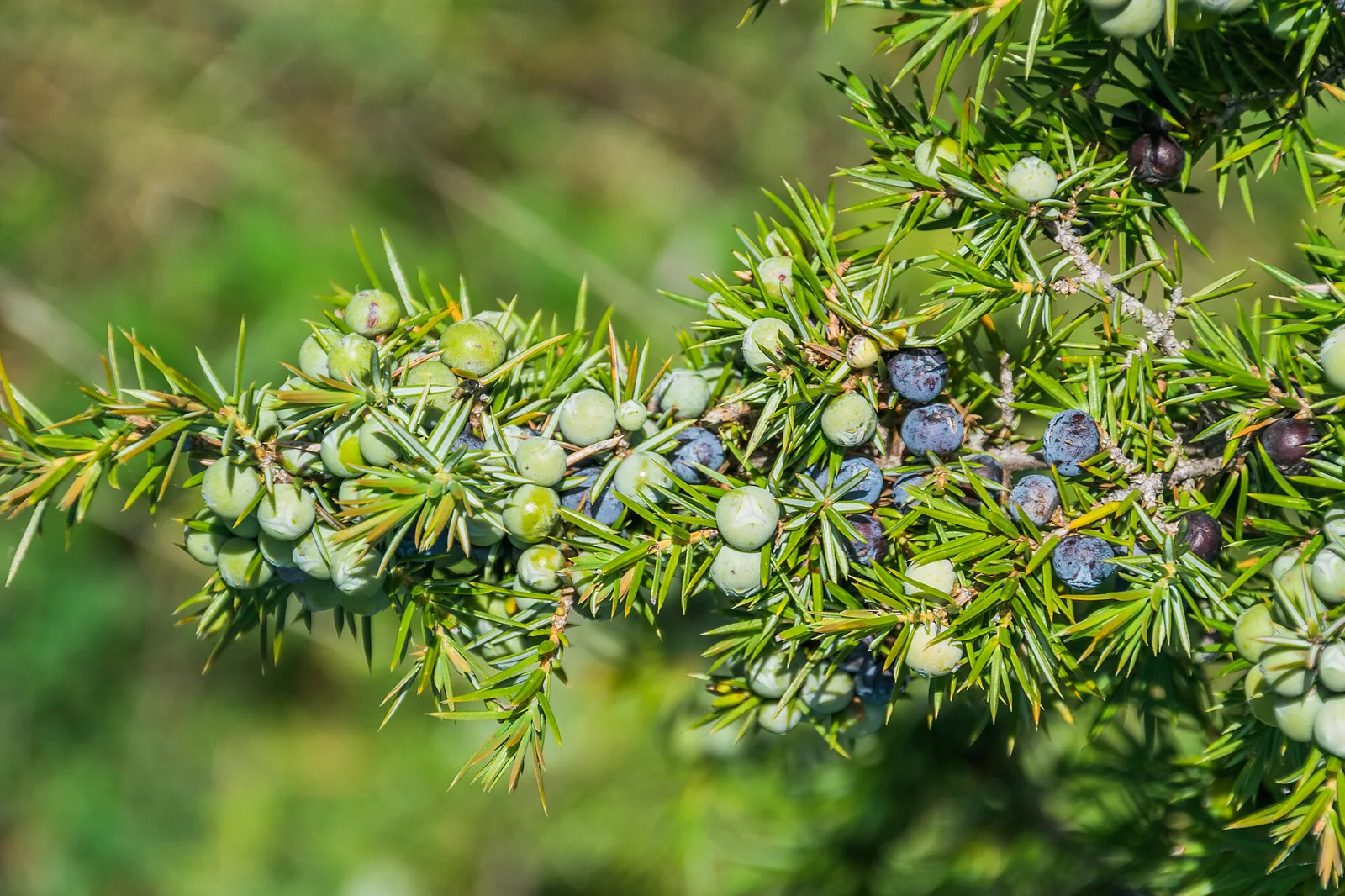
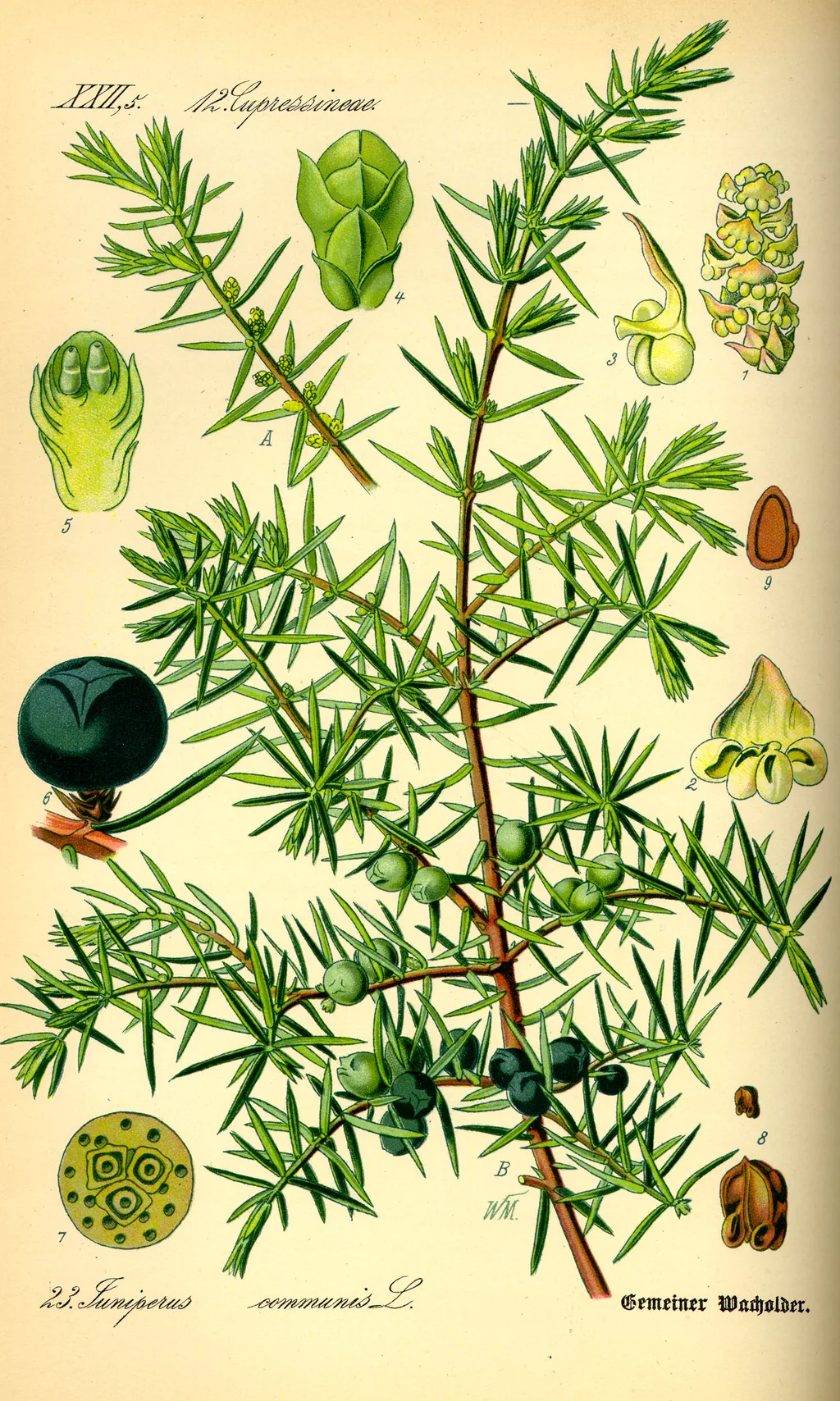
Common juniper is a shrub or small tree of one to five metres, often wider than tall and sometimes lying along the ground. It grows on poor, dry, well-exposed soils, often on rock outcrops and abandoned pastures.
Stem
Young twigs have smooth bark. On older branches, the brown, fibrous bark peels off in thin strips.
Leaves
Its leaves are short, prickly needles, grouped in threes around the twig, marked with a whitish band on the upper surface.
Flowers
The species is dioecious: each plant is either male or female. In spring, male plants bear small cones that release pollen; on female plants, the flowers will give the “berries”.
Fruit
What are called its berries are in fact female cones that have become fleshy: green in the first year, they turn blue-black, covered with a fine bloom, in the second.
Sources
Plant profiles from the gemmotherapy course (in French), eJardin Academy