
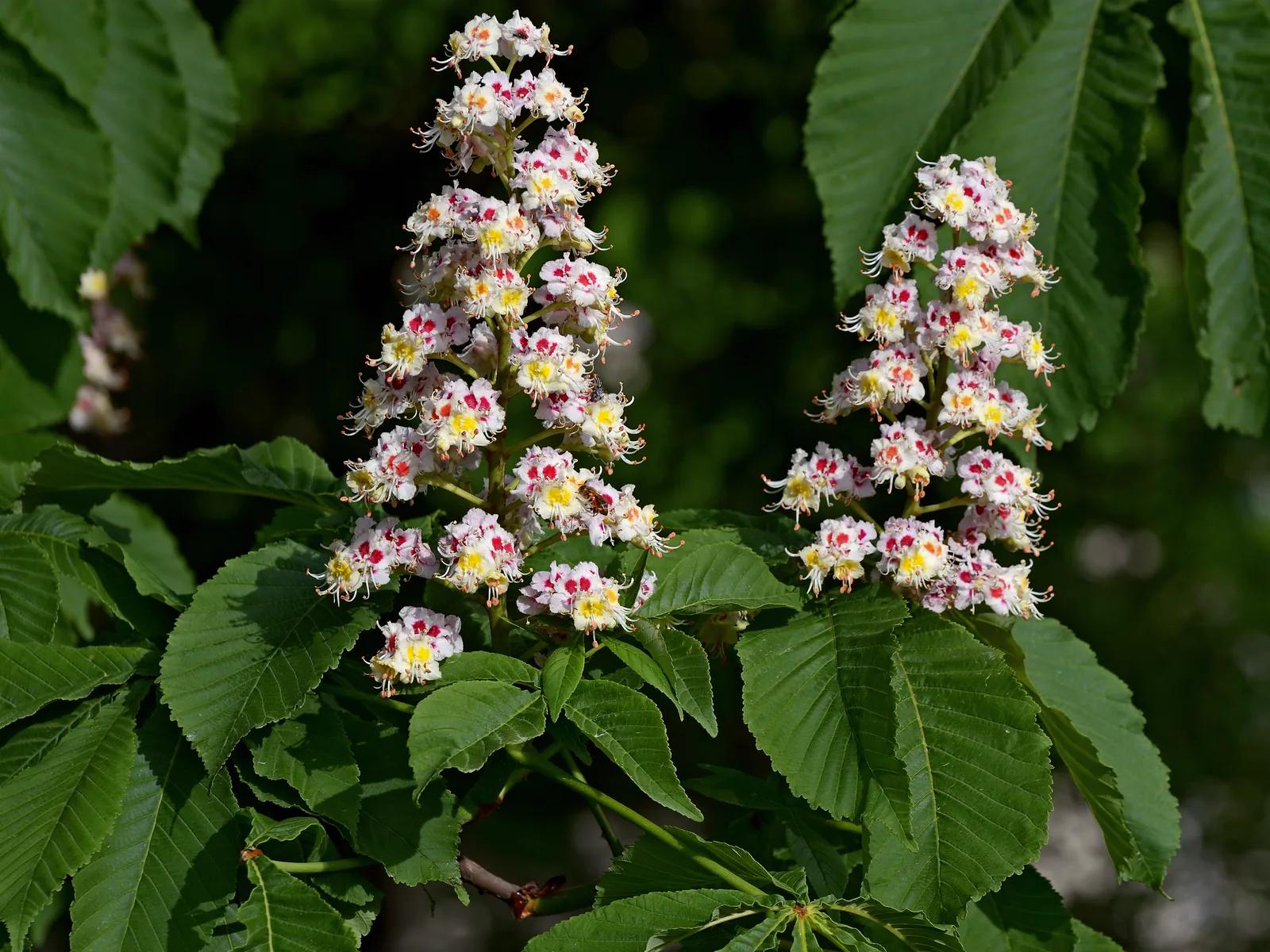
Horse chestnut
Aesculus hippocastanum
Based on the courses of Églantine Vignon, Master Herbalist Updated
How to identify horse chestnut
What to check before harvesting or using it.

The horse chestnut is a large tree with a broad, dense crown, commonly reaching twenty to twenty-five metres.
- Leaves
- Its leaves are opposite and compound, shaped like a fan: five to seven toothed leaflets, broad toward the tip and narrowed at the base, carried on a long leaf stalk.
- Flowers
- In spring, it is covered with large upright clusters of white flowers marked with pink and yellow spots, which you can spot from afar.
- Fruit
- The fruits are green capsules bristling with soft spines, which open in autumn to reveal one or two glossy brown conkers.
- Do not confuse with
- The horse chestnut seed (conker) is toxic, and it is often confused with the sweet chestnut, which is edible. The husk of the sweet chestnut tree is covered with long, fine, tightly packed spines that prick. It splits into four, revealing one to three flattened chestnuts. The horse chestnut fruit has only short, soft spines; it splits into three, revealing one or two round conkers marked with a broad beige patch.
Sources
- Plant profiles from the gemmotherapy course (in French), eJardin Academy