
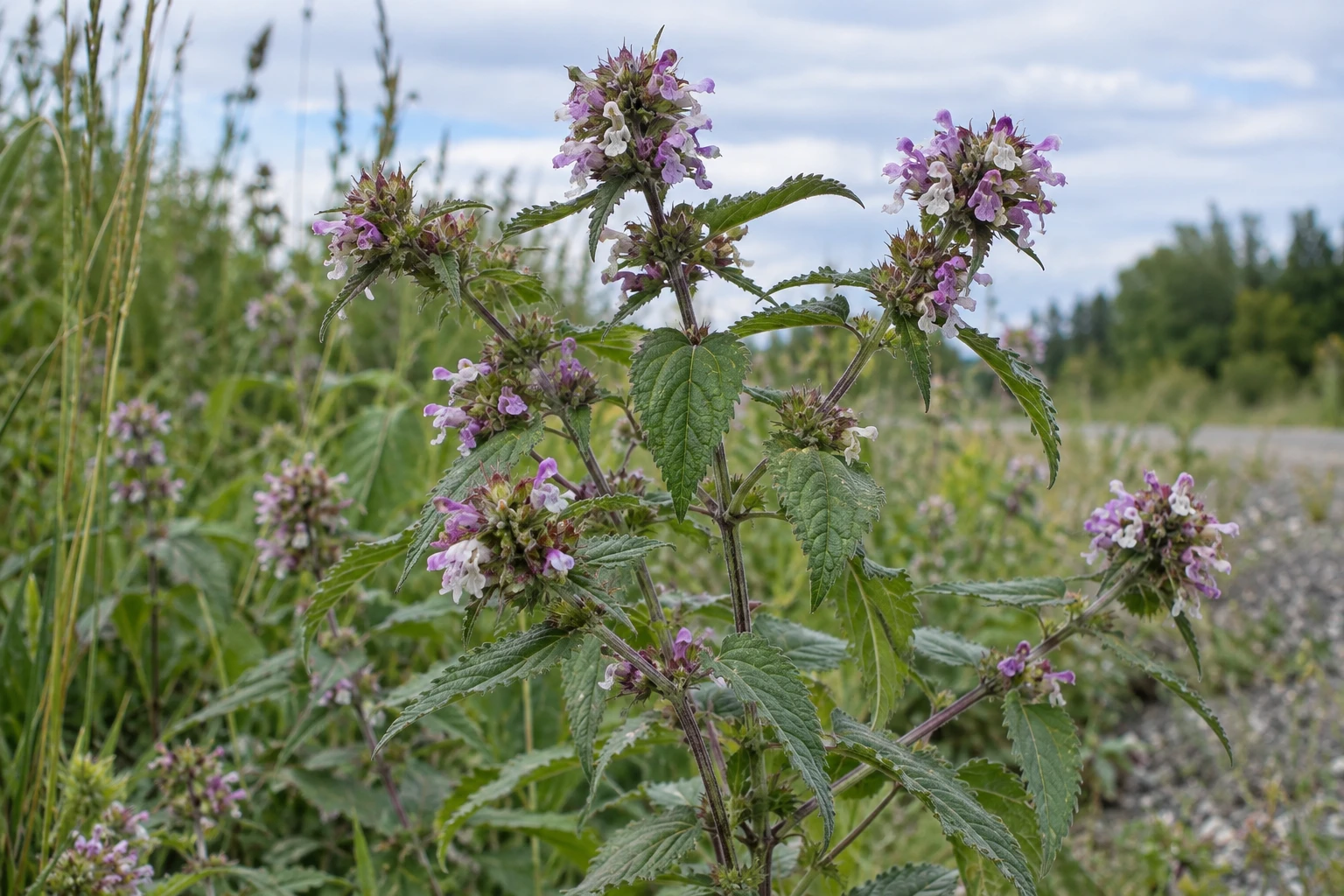
Common hemp-nettle
Galeopsis tetrahit
brittlestem hemp-nettle, bristle-stem hemp-nettle
Based on the courses of Églantine Vignon, Master Herbalist Updated
How to identify common hemp-nettle
What to check before harvesting or using it.
Common hemp-nettle is an annual from Eurasia, naturalized in Quebec, found along forest edges, riversides, fields and clearings.
- Stem
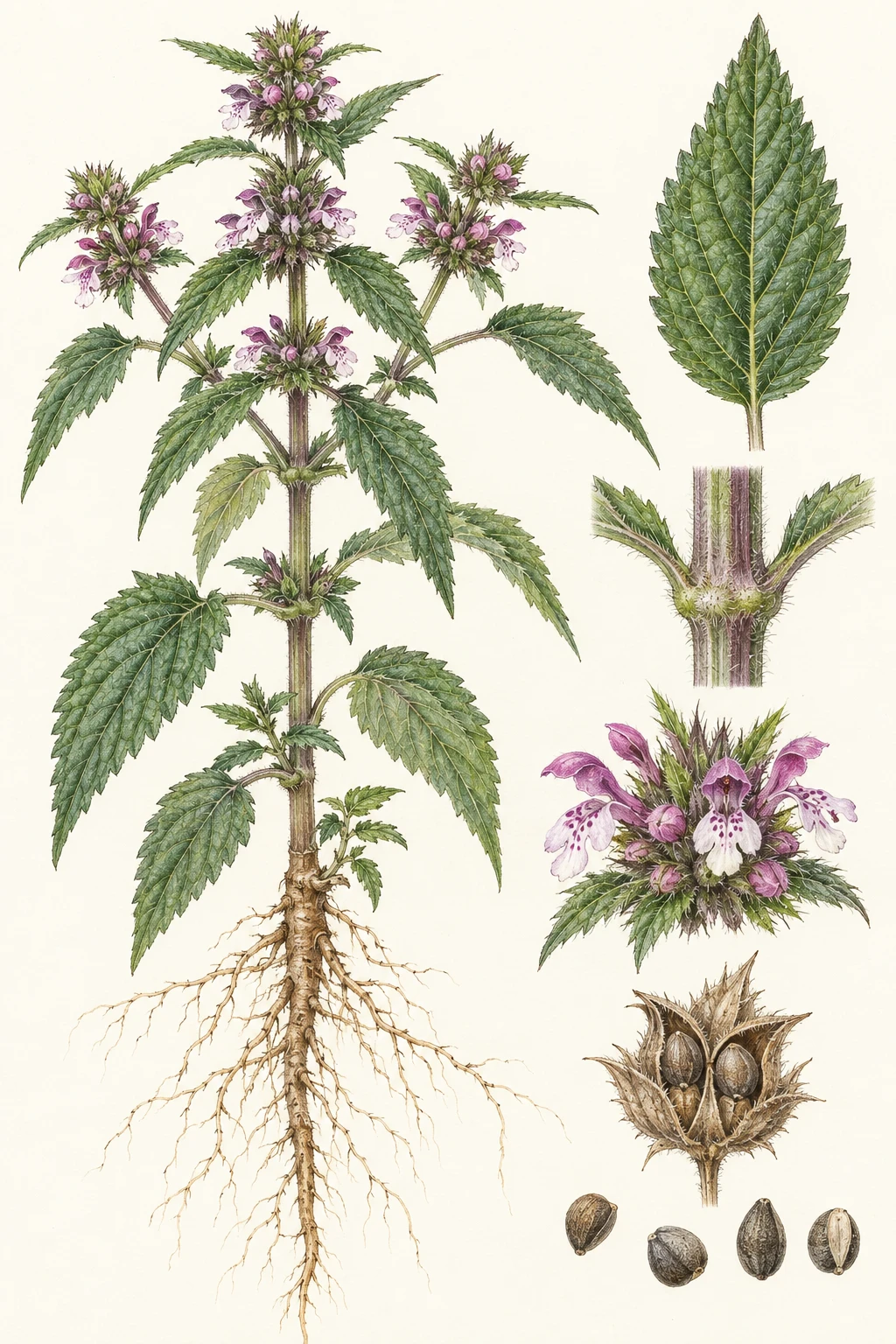
- The stem is square, stiff, branched, swollen below the nodes and covered with red-tipped hairs; it can reach one metre tall.
- Leaves
- Its opposite leaves are lance-shaped, toothed, hairy and long-stalked, and their deep veins give the blade a textured look.
- Flowers
- The two-lipped flowers, pinkish to violet and white, are gathered in clusters of about ten flowers at the end of the stem, with a three-lobed lower lip and an upper lip bristling with hairs.
- Fruit
- After flowering, the calyx dries in place and holds four seeds. It ends in five stiff points, which make the fruit prickly. The seeds are oval, wrinkled and greyish brown.
- Do not confuse with
- Before flowering, shaggy soldier (Galinsoga quadriradiata) can be told apart by its round stem and its leaves with three clearly visible veins. When in bloom, it bears small yellow and white composite flowers. Stinging nettle (Urtica dioica) has a square stem, rhizomes and strongly stinging hairs. Purple or white dead-nettle, which covers the ground in flower beds and undergrowth, is smaller.
Sources
- Plant profiles from the course “Managing Garden Weeds as Valuable Allies”, eJardin Academy