
Ground ivy
Glechoma hederacea
ground crown, creeping Charlie, alehoof
Based on the courses of Églantine Vignon, Master Herbalist Updated
How to identify ground ivy
What to check before harvesting or using it.

Ground ivy is a stoloniferous perennial that likes cool, shady places, near bodies of water, hedges and rich banks.
- Stem
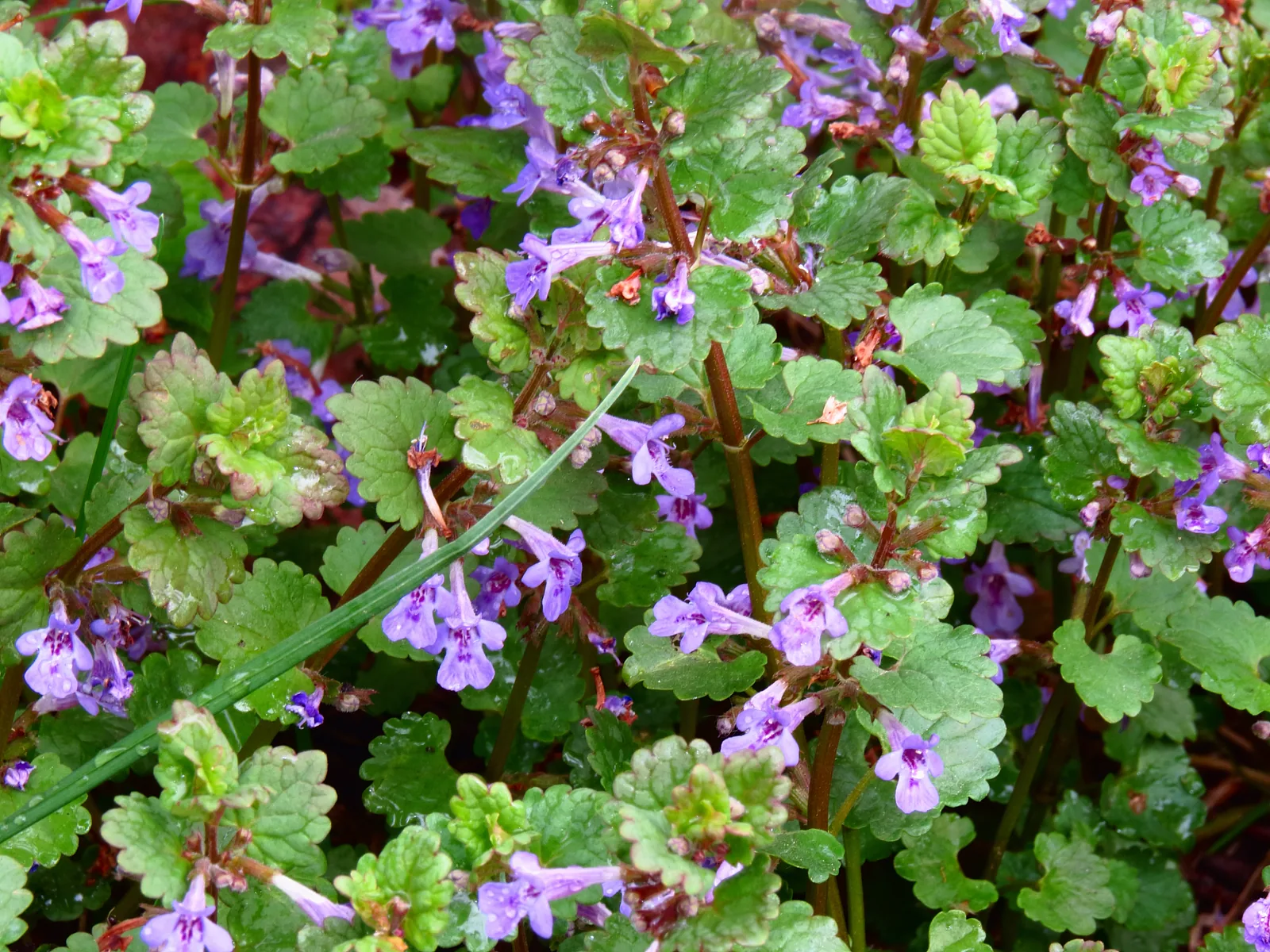
- Its creeping, purplish, hairy, square stems measure about 10 to 30 centimetres and root firmly at the nodes through adventitious roots. They bear upright shoots that carry the flowers.
- Leaves
- The opposite, stalked, heart-shaped leaves are dark green, sometimes purplish, rounded, crenate, downy and aromatic, with a smell slightly reminiscent of mint.
- Flowers
- The small tubular, two-lipped flowers, purple or violet-blue, are grouped in twos to fives in the leaf axils and open from May until fall.
- Fruit
- The fruit divides into four small brown seeds, rounded on one side and ribbed on the other, as in other plants of the mint family.
- Do not confuse with
- Creeping bugle (Ajuga reptans) has fairly similar leaves, but its blue flowers form a spike at the end of the stem. The young leaves of garlic mustard (Alliaria petiolata) also look like those of ground ivy, but they are hairless and lighter, with more irregular scalloping, and they smell of garlic when crushed. At first glance, some dead-nettles also look like it.
Sources
- Plant profiles from the course “Managing Garden Weeds as Valuable Allies”, eJardin Academy