
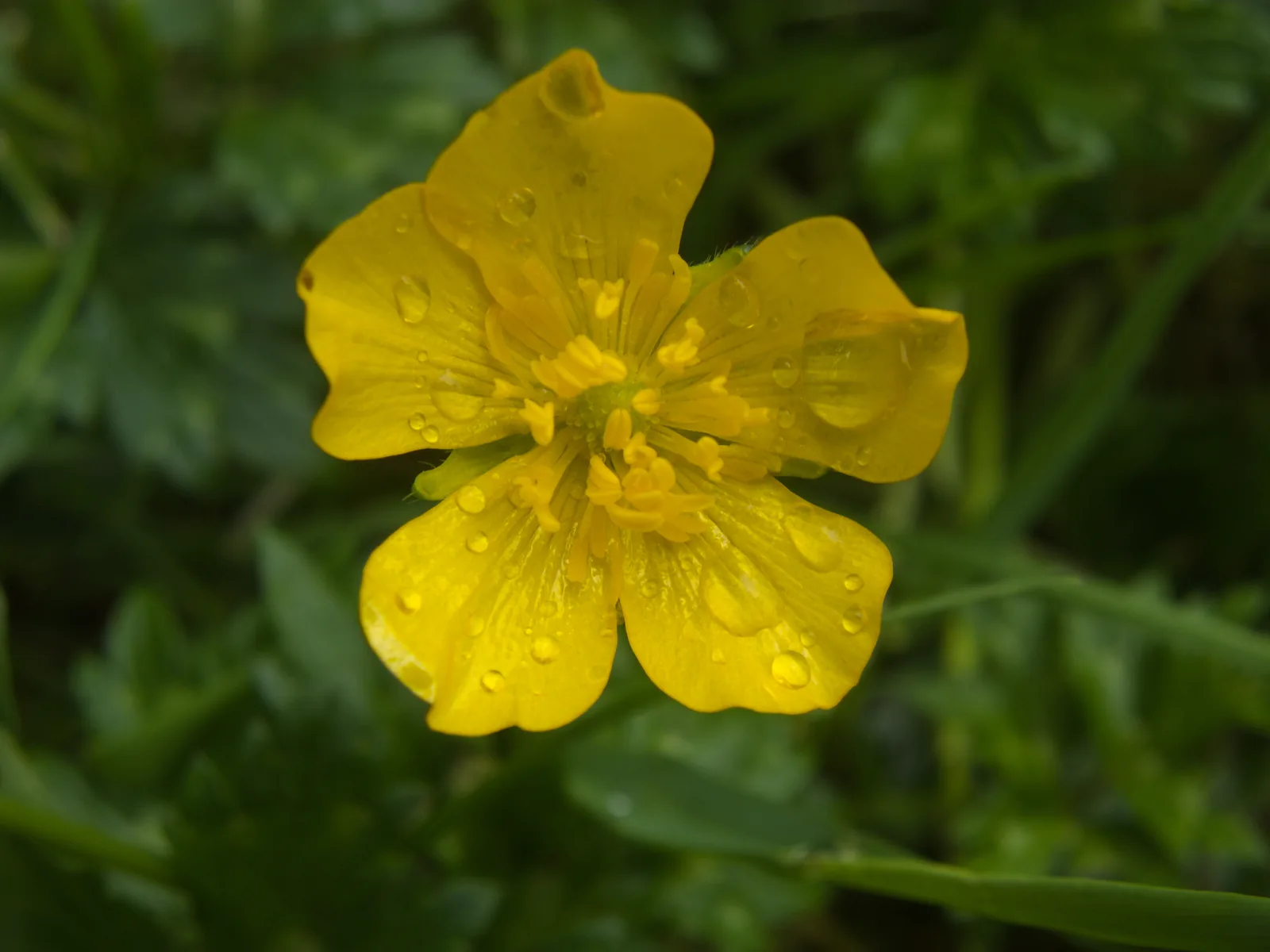
Creeping buttercup
Ranunculus repens
buttercup
Reviewed by Églantine Vignon, Master Herbalist, on
How to identify creeping buttercup
What to check before harvesting or using it.

Creeping buttercup is an invasive perennial of roadsides, lakeshores, fields and meadows, and it often signals damp soil.
- Stem
- It forms creeping stolons that root at the nodes and quickly create a dense mat. The stem is more or less upright and about 20 to 30 centimetres tall.
- Leaves
- Its leaves are divided into three leaflets with toothed to deeply cut margins; it also bears alternate, sessile stem leaves on the stolons.
- Flowers
- The bisexual flowers are bright yellow and borne on a short, pubescent peduncle, with five hairy, greenish sepals spread beneath five petals. They bloom from May to September.
- Fruit
- Smooth achenes extended into a beak, gathered in a small rounded head. They can still germinate after more than twenty years in the soil.
- Roots
- A strong but shallow root system. The stolons root at every node and end up forming a very dense mat.
- Do not confuse with
- Meadow buttercup (Ranunculus acris) looks similar, but it is taller and does not produce stolons. The middle segment of its leaves has no stalk.
Why it matters
Creeping buttercup is not used as a medicinal plant. Its value lies elsewhere: where it grows, the soil is damp, a useful clue for gardeners who want to understand their land. Knowing how to recognize it also keeps you from picking it by mistake along with other garden plants.
Good to know
When fresh, it is toxic: its sap irritates the skin, the mouth and the digestive tract. Handle it with gloves and do not eat it.
Sources
- Plant profiles from the course “Managing Garden Weeds as Valuable Allies”, eJardin Academy