
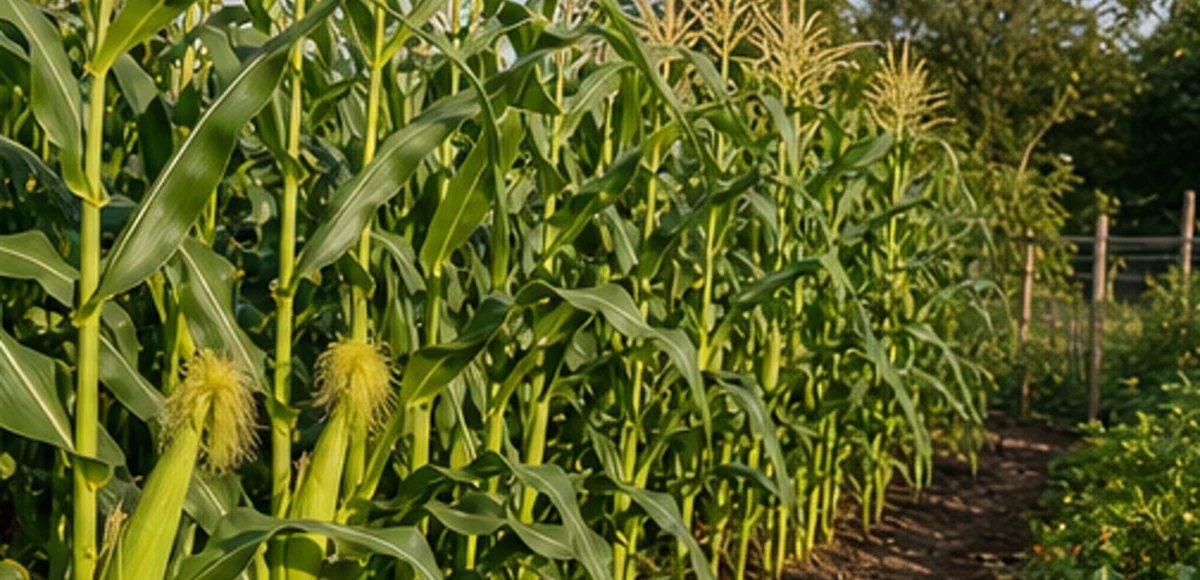
Corn
Zea mays L.
Based on the courses of Églantine Vignon, Master Herbalist Updated
How to identify corn
What to check before harvesting or using it.

Corn is an annual grass.
- Stem
- It has a sturdy, upright stem that can reach 2 to 4 metres in height, with well-marked nodes, filled with a spongy tissue.
- Leaves
- Its alternate, long, lanceolate leaves are 30 to 100 cm long, with a broad blade and the parallel veins typical of grasses.
- Flowers
- Corn is monoecious, which means it has separate male and female flowers on the same plant: the male flowers, grouped in terminal panicles (tassels), produce the pollen needed for fertilization. The female flowers are in the leaf axils, in the form of cylindrical ears protected by thick husks. The stigmas of these flowers, called corn silk, are long silky threads that ensure wind pollination.
Sources
- Plant profiles from the course “Tropical Medicinal Plants”, eJardin Academy