
Chamomile
Matricaria recutita
German chamomile
Based on the courses of Églantine Vignon, Master Herbalist Updated
How to identify chamomile
What to check before harvesting or using it.

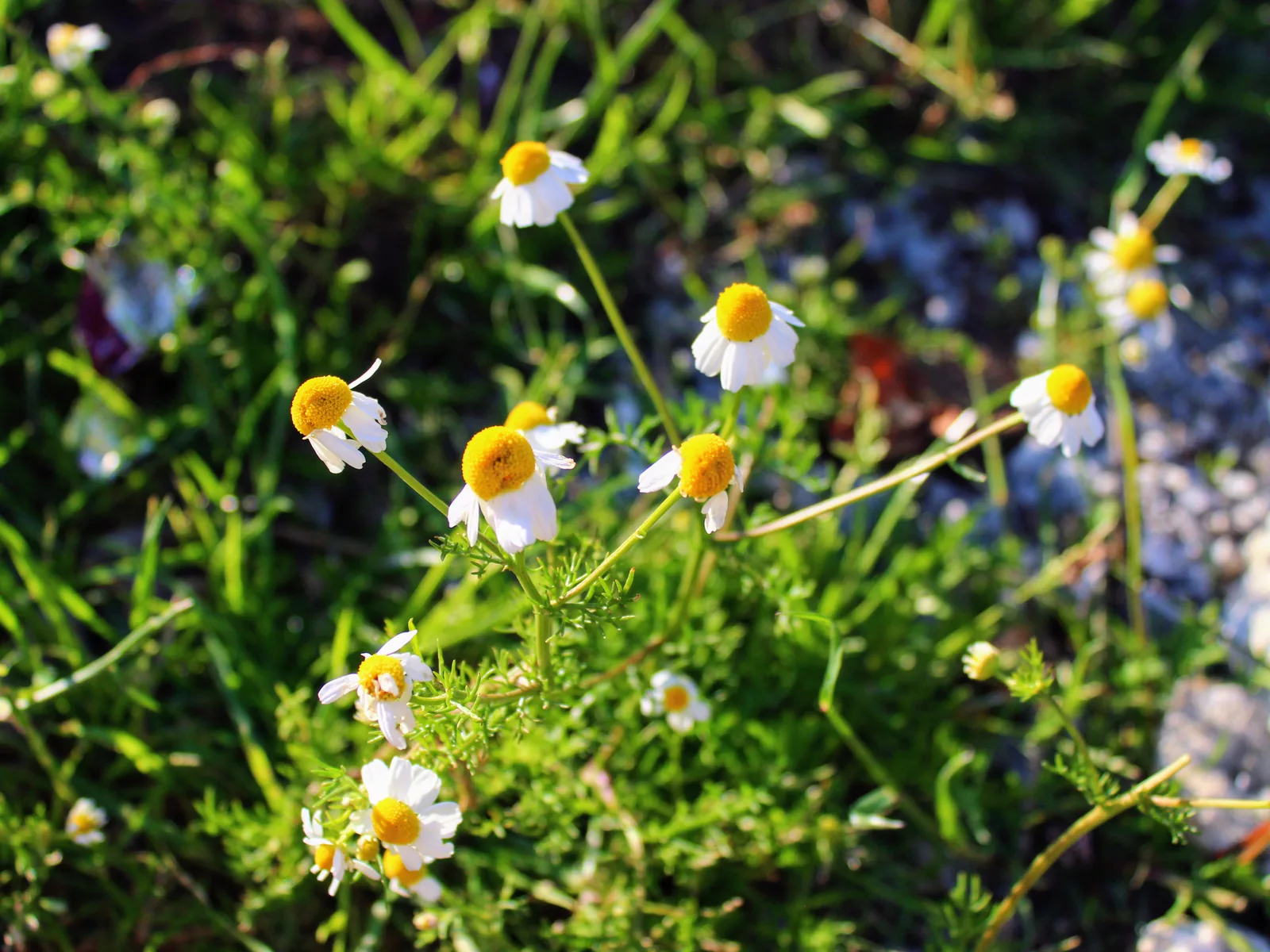
Annual plant, 20 to 50 cm tall.
- Flowers
- Each flower head has many yellow tubular flowers in the centre and, around the edge, a few flowers sheathed in a white ligule, which we call a petal.
- Fruit
- The seeds (achenes) are tiny, about 1 mm, yellowish white and slightly curved, with five fine ribs on one side. They have no pappus.
- Do not confuse with
- Roman chamomile (Chamaemelum nobile) is a different plant: a perennial with creeping stems that form a mat, with small scales (chaff) between the disc flowers. German chamomile, the one in this sheet, is an annual with upright stems. The essential oil called Roman chamomile comes from Roman chamomile.
Chamomile in the garden
- Sun exposure
- Sunny, but tolerates a little shade, especially in hot weather
- Soil
- Well-drained, dry, sandy soil
- Hardiness zone
- 3
Sources
- Plant profiles from the course “Medicinal Plants in the Garden”, eJardin Academy