
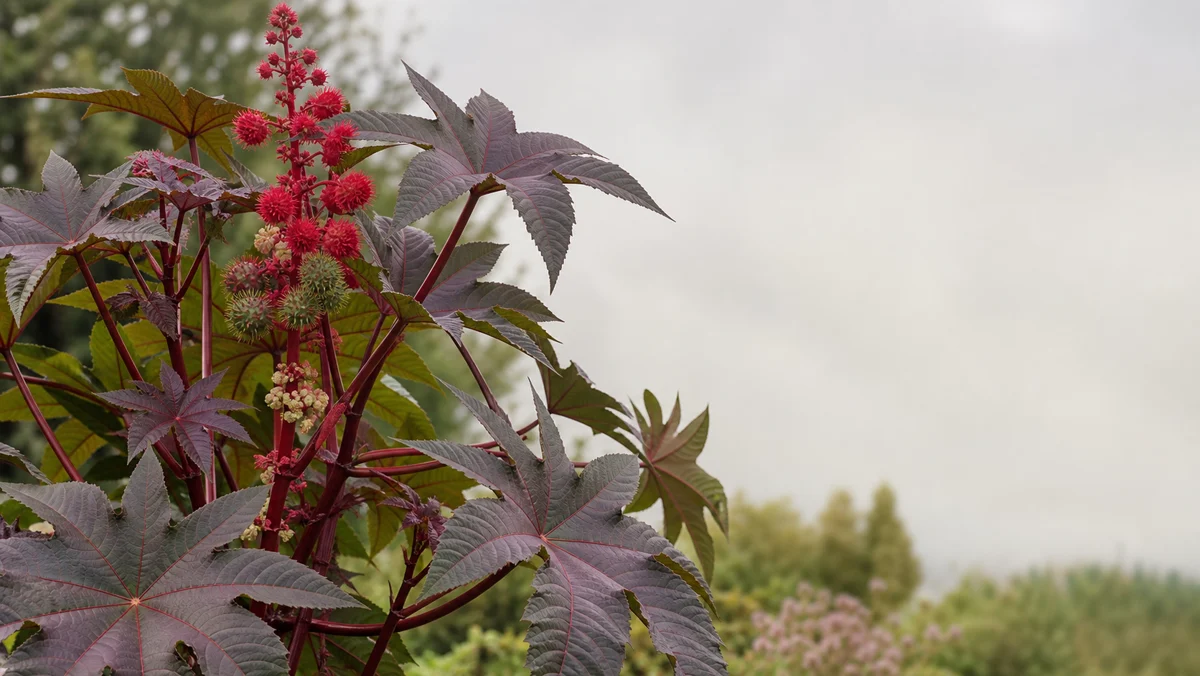
Castor bean
Ricinus communis L.
Based on the courses of Églantine Vignon, Master Herbalist Updated
How to identify castor bean
What to check before harvesting or using it.

The castor bean plant is a perennial that can reach 2 to 5 metres in height in temperate climates and up to 10 metres in tropical regions.
- Leaves
- Its alternate, palmate, deeply lobed leaves are 30 to 70 cm across and have 5 to 11 pointed lobes with prominent veins. Their colour varies from light green to purplish red depending on the variety.
- Flowers
- The castor bean plant is monoecious: it bears both male and female flowers on the same plant. The male flowers, at the base of the clustered inflorescences, are small and grouped together, with many stamens releasing abundant pollen. The female flowers, at the top of the inflorescence, have a spiny, three-lobed ovary that develops into a capsule fruit covered with spines.
Sources
- Plant profiles from the course “Tropical Medicinal Plants”, eJardin Academy