
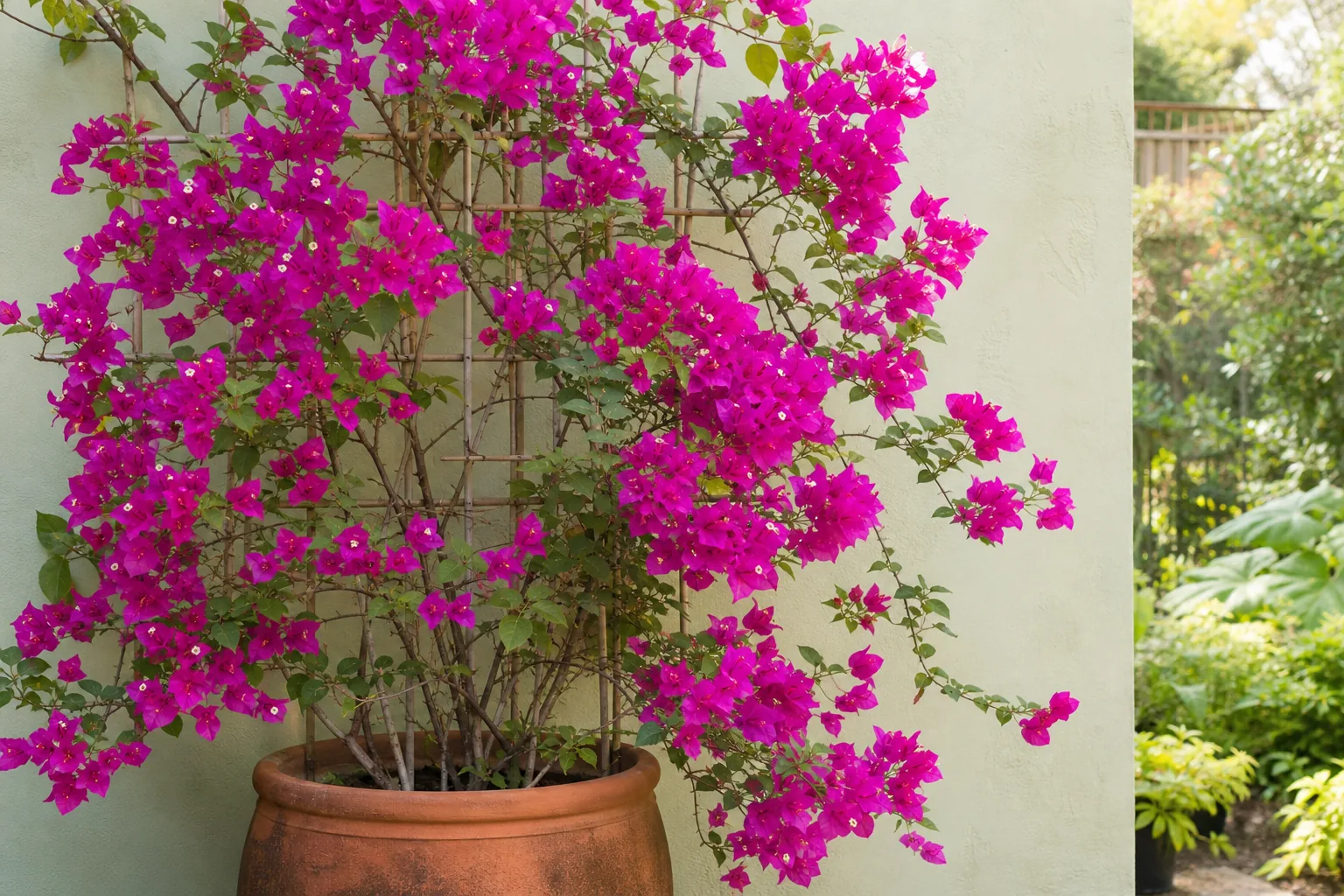
Bougainvillea
Bougainvillea spp.
Based on the courses of Églantine Vignon, Master Herbalist Updated
How to identify bougainvillea
What to check before harvesting or using it.

Bougainvillea is a climbing plant with woody, trailing stems, often armed with small thorns that let it cling to natural or artificial supports.
Traditional uses of bougainvillea
- Respiratory
- Immune and lymphatic
- Skin and integumentary
Bougainvillea is best known for the colourful bracts that cover walls in hot countries. Yet it has a few traditional uses: its bracts and flowers to soothe coughs, its leaves for their antioxidant properties, and some preparations for the skin and hair. Its leaves are also associated with blood sugar balance.
Good to know
Some parts irritate the skin and mucous membranes, and in large amounts it can be laxative. Its thorns are sharp: handle it with gloves.
Sources
- Plant profiles from the course “Tropical Medicinal Plants”, eJardin Academy