
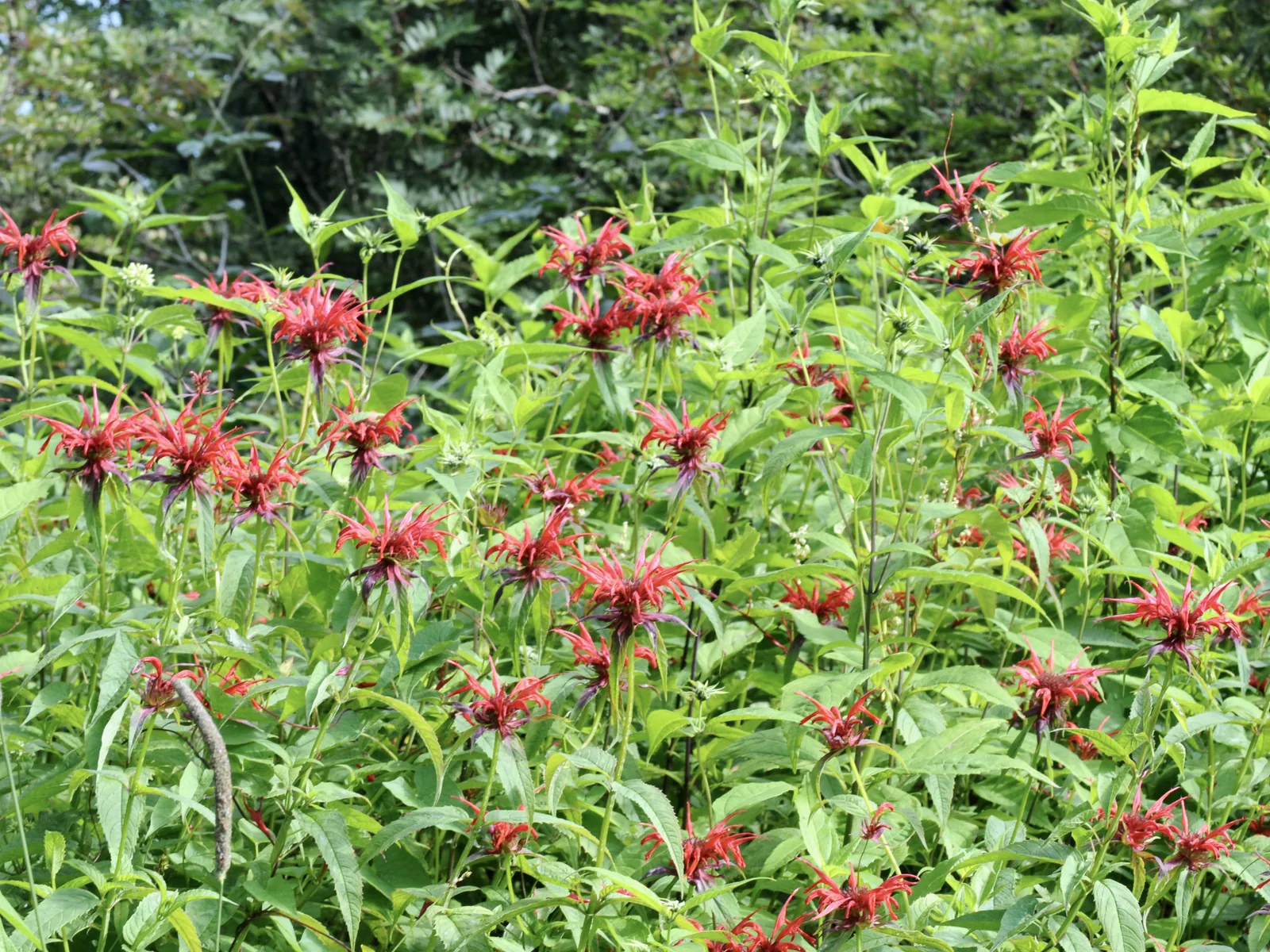
Bee balm
Monarda didyma and M. fistulosa
scarlet bee balm, Oswego tea, bergamot
Reviewed by Églantine Vignon, Master Herbalist, on
How to identify bee balm
What to check before harvesting or using it.

A perennial plant 80 to 90 cm tall.
Traditional uses of bee balm
- Digestive
- Respiratory
- Nervous
- Immune and lymphatic
Its leaves, with a scent close to bergamot, are traditionally used for digestion, especially for bloating and nausea. Bee balm is also associated with the airways and the mouth: as an herbal tea or a gargle, it often turns up during the cold season for its antiseptic properties. As an aperitif plant, it also helps whet the appetite.
Good to know
During pregnancy and breastfeeding, avoid it. Its essential oil is never applied undiluted to the skin or mucous membranes.
Bee balm in the garden
- Sun exposure
- Full sun
- Soil
- Fertile, well-drained
- Hardiness zone
- 3
Sources
- Plant profiles from the course “Medicinal Plants in the Garden”, eJardin Academy